Vancouver sugar refining, the workers' strikes of 2023, and indentured labor at Fijian plantations in the 1910s: Phantom limbs of British Columbia in a global circuit

(Originally posted summer 2024.)
Updates are in order. Two things I was exploring in early 2024:
While reading on disability, I found Jane Buckingham's recently published piece:
"Disabling labour: race, disability and Indian indentured labor on Fijian sugar plantations, 1879-1920," Postcolonial Studies, vol. 27, no. 1 (2024), Special Issue: Disability and Postcolonialism, pages 83-98.
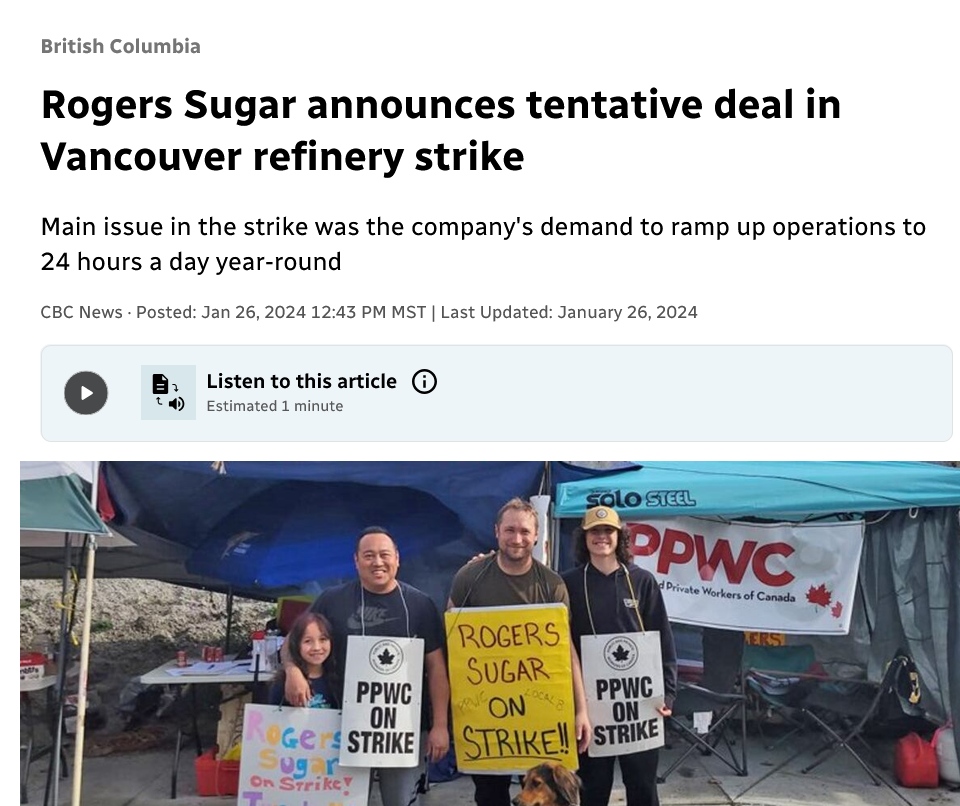
Then, I was reading about the four-month-long (September 2023 to February 2024) strikes (supported by Public and Private Workers of Canada) at Rogers Sugar in Vancouver.
Both of these lent more weight to something I was discussing online last year. See below.
(The following was originally posted elsewhere on 9 May 2023.)
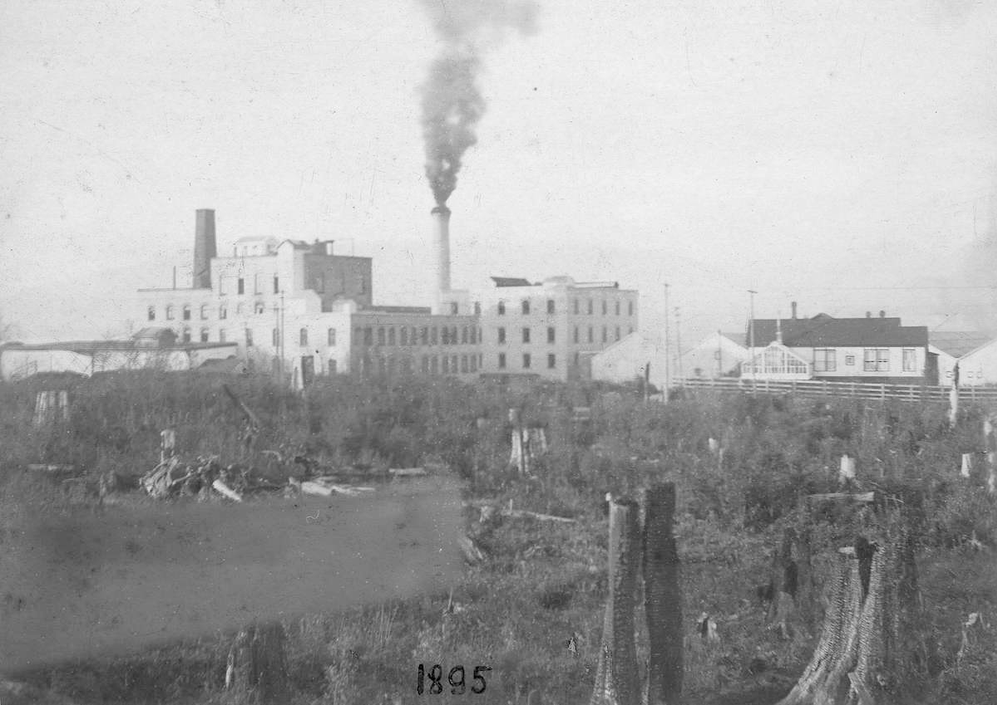
While doing some reading on Canadian investment in the tropics, I'd come across the image pictured above. The image comes from the City of Vancouver Archives, AM1592-1-S2-: 2011-092-3821.
Here, pictured in 1895, you can see the forest clearance surrounding BC Sugar Refinery in what would become downtown Vancouver.
Today, Vancouver remains invested in tropical sugar.
Turns out that, only a couple of months ago, historian Donica Belisle (of University of Regina) had published a helpful piece at The Conversation.
--
Excerpt:
But what is more upsetting about sugar is its atrocious history. To this day, working conditions in sugar are among the world’s worst. […] For nearly five centuries, European planters made dizzying fortunes in sugar, made possible by enslaving workers in colonized lands. […] Canadian investors, too, have reaped massive sugar profits. During the 1700s and 1800s, most Europeans, in what is now Canada, were implicated in the transatlantic sugar and slave trades. Not only did many consume the fruits of the enslaved sugar industry — including molasses and rum, in addition to sugar, as historian Afua Cooper writes — but some also invested in Caribbean trade, itself powered by enslaved sugar work.
Several Canadian banks — including the Imperial Bank of Commerce and the Bank of Nova Scotia (now known as Scotiabank) — have their origins in the West Indies, where their forerunners established themselves early in the 19th century. According to Cooper, the Bank of Nova Scotia exists “in the shadow of West Indian slavery.”
—
Western Canadians have also profited from unfree sugar labour. The famed western Canadian brand, Rogers Sugar, was established by American Benjamin Tingley Rogers who moved to Canada in 1889. Having grown up in the sugar industry, Rogers had both sugar connections and expertise.
Building a refinery in Vancouver, a city newly constructed […], Rogers created a western Canadian sugar empire — one that sourced raw sugar cane through the Pacific, refined it in British Columbia and sold it throughout the Canadian West. Railway magnate William Cornelius Van Horne, together with noted investors […], were among the ventures’ early shareholders. By the time of his death in 1918, Rogers had become “quite wealthy.” Now owned by Lantic Inc., Rogers Sugar remains a recognized Canadian brand. Less well known, though, is Rogers Sugar’s violent past. […]
Refined predominantly in Vancouver, Rogers Sugar was made mostly from raw cane sugar. Since sugar cane cannot grow in Canada, B.C. Sugar sourced internationally […]. B.C. Sugar also ventured into sugar cane plantation ownership: in Fiji between 1905 and 1922, and in the Dominican Republic between 1944 and 1955. Notably, it purchased the latter from the Bank of Nova Scotia. In both cases, workers reported horrendous conditions. The pay was so low and the work was so menial in the Dominican Republic that, as historian Catherine C. Legrand points out, workers left the plantation whenever they could.
—
In Fiji between 1905 and 1920, B.C. Sugar employed indentured workers from India who migrated to the colony on five-year contracts. […] Forced into hard physical labour with little time for sleep, indentured workers at B.C. Sugar’s Fiji plantation endured sickness, confinement, hunger, abuse, injuries, whippings, beatings and more […]. When Fiji de-criminalized the desertion of indenture contracts in 1916, it is little wonder that hundreds of workers left the colony’s sugar plantations. […]
Canadian sugar was built upon violence, including upon enslaved and indentured labour.
—
All text above by: Donica Belisle. “Uncovering the violent history of the Canadian sugar industry.” The Conversation. 16 March 2023. [Emphasis mine.]