Contextualizing a joke about the 'Great Moon Hoax of 1835' with Kathryn Yusoff's telling of colonial imaginaries of Antarctica, the US Navy's 'Hollow Earth' expedition, and entanglements of fiction and knowledge frontiers
(Originally posted elsewhere on 25 August 2025.)
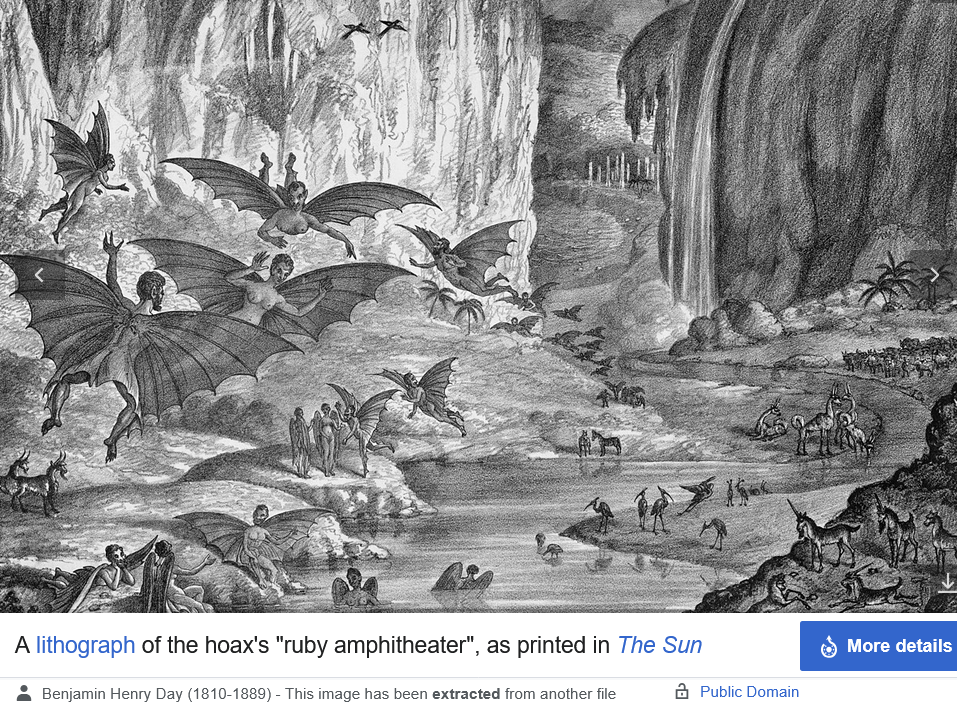
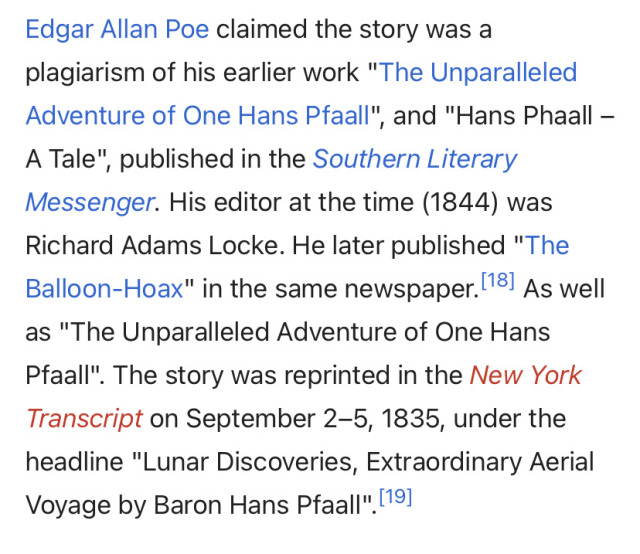
Edgard Allan Poe was implicated not only in dramatizing/fictionalizing imagined stories of discovering life/'civilization' on the moon, but also published a serialized dramatization of expeditions to Antarctica to investigate "Hollow Earth theory." And I love Yusoff's framing of the significance of Poe's entanglement with US popular imagination, US military responsiveness to public sentiment, the role of vision in European epistemologies, and geographical imaginaries generally.
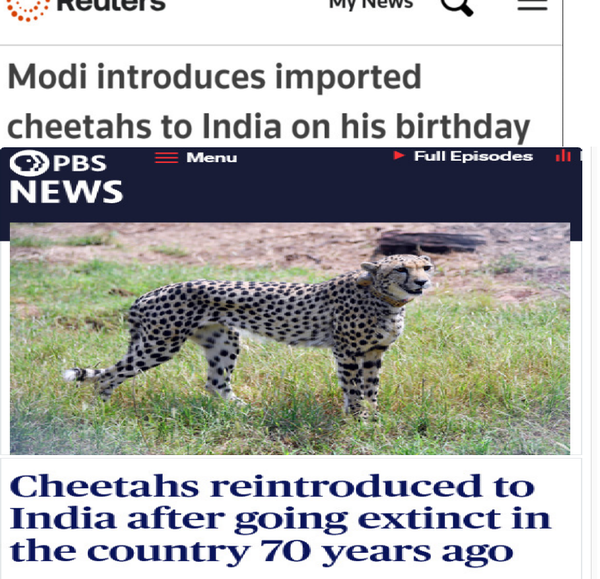
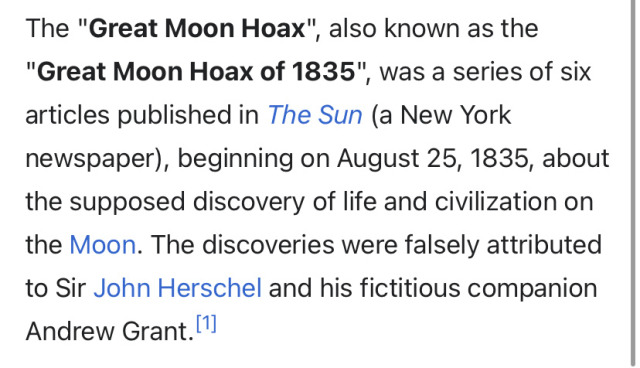
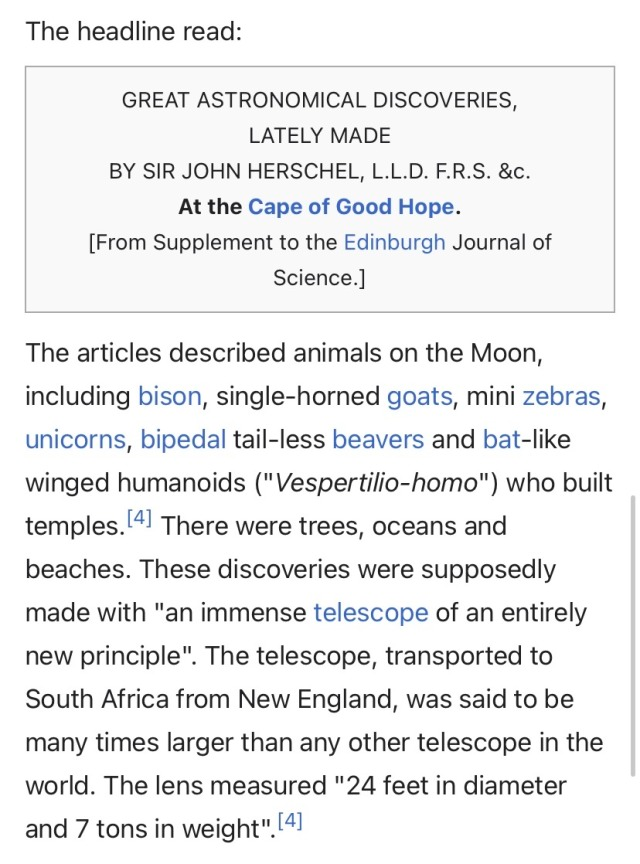
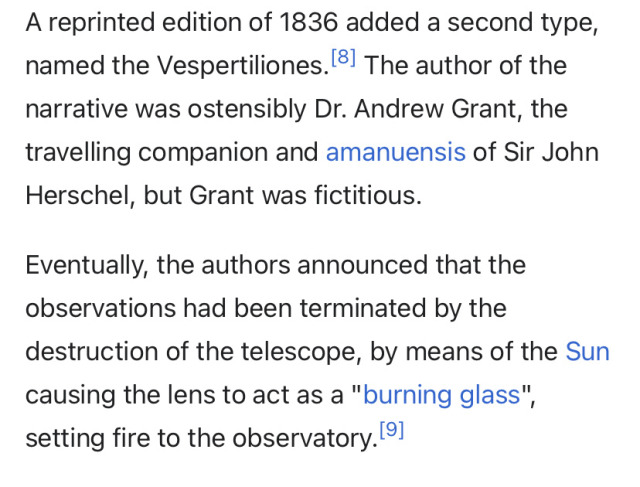
So, my social circle online was circulating screenshots of the Wikipedia page for the 'Great Moon Hoax' with an implied air of curiosity/novelty/making-fun.
My friend prompted it with these screenshots:
--
And I cannot help but think of Yusoff's work.
She described how the US Navy's expedition was partially inspired by calls to evaluate a similarly dramatic theory. Likewise, Poe was involved in this, too. Yusoff invites thought about how pop-sci/popular fictions exercise real influence.
(Maybe also go check out Elizabeth DeLoughrey's article on the juridicially and imaginatively interlinked nineteenth- and twentieth-century US and British conflation of the high seas, Antarctica, and space exploration as similar frontiers of both knowledge and spatial power/presence requiring legal governing frameworks/claims of possession. Especially interesting when she acknowledges that the celebrated US space shuttle Endeavour maintained its British spelling because it was named after Captain Cook's globe-encircling vessel Endeavour which signaled a claim for Australia/South Pacific--both vessels, thus, indicating the spatial expansion of an English-speaking empire into terra incognita.)
Check it out.
--
Excerpt:
In 1842, the Antarctic explorer Charles Wilkes stood trial by court-martial on the charge of “immoral mapping”.
Wilkes faced an indictment of “Scandalous Conduct Tending to the Destruction of Good Morals” for his designation of land on January 19th, 1840, where there was none to be found. His claim was to have “discovered a vast Antarctic continent…” […] Wilkes had made a false entry as to the date on which he sighted “Antarctic land” […]. Later defenders of Wilkes’ reputation claimed that his’ “immoral mapping” could be explained by recourse to the particular atmospheric phenomena of the Antarctic region. In the strange Antarctic light, Wilkes had seen a superior mirage. […] [T]he mirage most strongly demonstrated the latent possibility of a ‘geographical gift’ to the normative European history and practice of vision. […] The image of the mirage is genuine, it is just an exaggerated displacement from a usual terrestrial location. A superior mirage means that there is an inverted image above an erect one, hence the image is lifted above the horizon […]. So whereas the mirage holds false promise for the making of maps, as a tool of vision it offers a remarkable glimpse of what the earth’s curvature has made invisible. […]
—
The origins of Wilkes’ US Exploring Expedition stemmed from John Symmes petition for a US-led expedition to substantiate his Hollow Earth theory.
Symmes’ theory proposed that the earth was a semi-hollow sphere of concentric spheres that had their entrance at the poles. […] Although Symmes’ concentric concept had received extensive scientific criticism, no one had yet gone far enough to the Poles to dispel his speculative theory empirically.
To support a bid for funds for a southern expedition, the Secretary of the Navy employed Jeremiah N. Reynolds to collect information from the public as to what areas of the globe were most in need of exploration. Reynolds […] [was] a keen supporter of Symmes’ theory (and had lectured on the possibility of openings at the Pole) […]. Reynolds published his “Address on the Subject of the Exploring Expedition, First Proposal” in Harper’s New Monthly Magazine in April 1836. Even though the focus of this inquiry was on the commercial potential of the southern regions, the speculative quality of these geographies had a much stronger pull.
—
Indeed, one of Reynolds lectures was attended by Henry Allan, the brother of Edgar Allan Poe.
Poe was in turn inspired to write his only novel, The Narrative of Arthur Gordon Pym of Nantucket. It was in the context of Wilkes’ departure for Antarctica in 1837/38 that Poe published his novel in serial form in the Southern Literary Messenger.
The US public was focused on Antarctic travel and the speculative geographies of ‘discovery’ of hollow earth that had initiated the expedition. The Narrative presents the story of the explorer Pym, who ventured down to the southern polar latitudes. The account first appeared “under the garb of fiction”. A year later Poe republished the work as a novel. When he did so, he added a preface claiming that the work was factual. Poe’s fictional explorer, Pym, whose name was derived directly from Symmes, was on a similar quest: to find a hole at the pole and make fiction fact. Poe’s narrative account formed a fictitious log, filling the days of his imaginary expedition to Antarctica with ever more speculative adventures - while simultaneously Wilkes recorded in his logs the days of a real expedition, which were subsequently held up as fiction. Poe’s narrative ends with the hero’s vessel plunging into a polar abyss, having fallen into Symmes’ ‘hole at the pole’. Wilkes’ narrative ends with his court martial […].
—
In these narratives one text of speculative geography was literally engulfed by another. In Poe’s account the fantastical nature of the Polar Regions was used to conveyed its own form of facticity, as the Antarctic was rendered a place stranger than fiction. Poe’s work performs what Smithson calls a “mirror symmetry” to Wilkes’ Narrative. His concerns are the black holes in perception, those rents in our language that highlight how our perception is orientated - visually and literally. Poe’s novel is concerned with inversions; the pole becomes a hole and vortex, instead of an axis in which to plant a flag or claim a continent; real discoveries and scientific practices are incorporated into fictional accounts of imaginary expeditions; the validity of truths is questioned in order to make the account seem more factual. […] This highlights how geographical description is the space of that negotiation between speculation and fact. […]
—
Fiction implies the existence of fragile structures (or holes) around which our knowledge forms (as a fleeting testimony). […] We can see this ‘unknowing’ (or fiction) as a form of geographic speculation in relation to the unknown or what later critics were to call Poe’s Narrative [a] first example of: Science Fiction (SF). In exploration, narrative was a form of aesthetic instrumentation that crafted the density of objects, more than it was a medium for the translation of things. And so, it had a transitional quality that acted as an aestheticising lens onto the unknown and peculiar.
Arthur E. Shipley’s narrative of the ABYSMAL FAUNA OF THE ANTARCTIC REGION from the 1901 Antarctic Manual demonstrates exactly this conjuring force of such narratives:
No light from the sun penetrates the deep sea. There is no day and night. In connection with this absence of light from without certain animals, notably the Fishes, Crustacea, some Echinoderms, and Worms, have developed phosphorescent organs, but the part they play in illuminating the depths can hardly be greater than that of the p0licemen’s bull’s-eye in lighting up London during a November fog. Corresponding with this darkness, lit up by an occasional phosphorescent flash, the animals of the depths have either lost, or are losing, their visual organs, or have developed enormous eyes… If we could see the bottom of the deep sea, we should see, except in those few places where a current is active…Certain curious features occur over and over again in the deep-sea creatures for which there seems no obvious reason. […]
The concern with seeing that permeates the account is paralleled with the attempt to shed the light of knowledge onto such abysmal depths.
To make visible is to make knowledge.
And descriptive narrative is one of the fundamental tools in this process of visibility/perception. In a world structured into the explainable, the peculiar, and the new, the “abysmal fauna” introduced doubt only in so much as it questioned the order of things, but not necessarily the ordering strategies. […]
Narrative is clearly part of the scientific apparatus - the ability to tell a good yarn, to excite, stimulate (and embellish, where appropriate) was part of the expectation and construction of scientific accounts. […]
The map provides the site on which the narrative can take place. That Antarctica is often the site of inversions in understanding is not just a convenient literary trope of a far-away place, but also is based on the excessive cartographic and locational problems that the landscape posed to normative structures […].
—
Text above by: Kathryn Yusoff. “Climates of sight: Mistaken visbilities, mirages and ‘seeing beyond’ in Antarctica”. In: High Places: Cultural Geographies of Mountains, Ice and Science (2008). [Emphasis mine.]