Contextualizing headlines about a 'legendary' giant worm: Remnant Palouse prairie, industrial development, and Indigenous plant stewardship in the inland Pacific Northwest
(Originally posted elsewhere on 13 September 2019.)
I imagine you may be annoyed by now given the ongoing fixation on geographical peculiarities of the Okanogan, Palouse, and other corners of the inland Pacific Northwest. Previously, we'd covered how the Clearwater River networks and lower Snake River (both adjacent to the Palouse Hills/Prairie) house very unique/remarkable distribution range extensions for some dramatic creatures much more emblematic of the Pacific coast and Mediterranean Californian ecology (anadromous salmon, white sturgeon, ring-necked snakes, etc.). Also: The uniqueness of how the Palouse area allows proximity between "dryland" landscapes/species of the Columbia Plateau (sagebrush steppe, Woodhouse's toads, tiger salamanders, Northern Pacific rattlesnakes, etc.) and cedar-hemlock forest/Northern Rockies landscapes/species (moose, fisher, wolverine, Coeur d'Alene salamander, etc.).
But we've got to acknowledge, also, the worm.

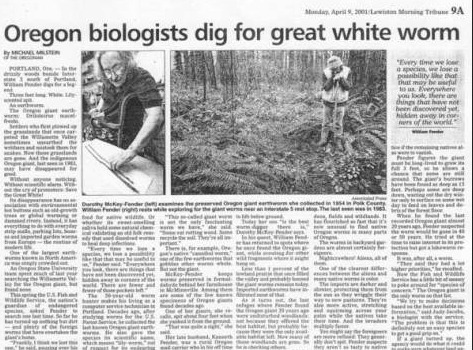
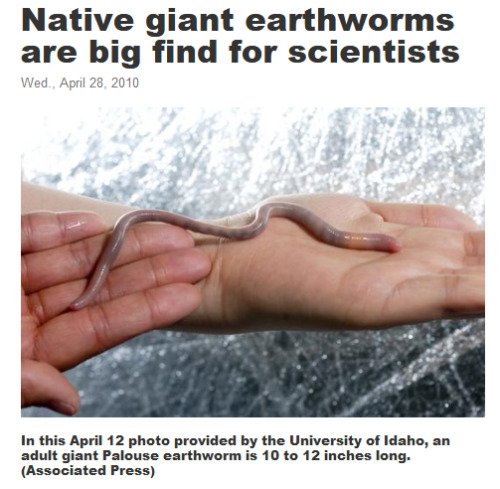
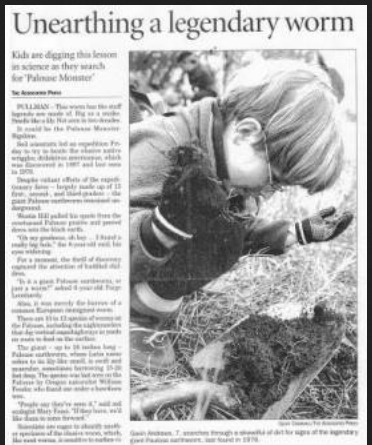
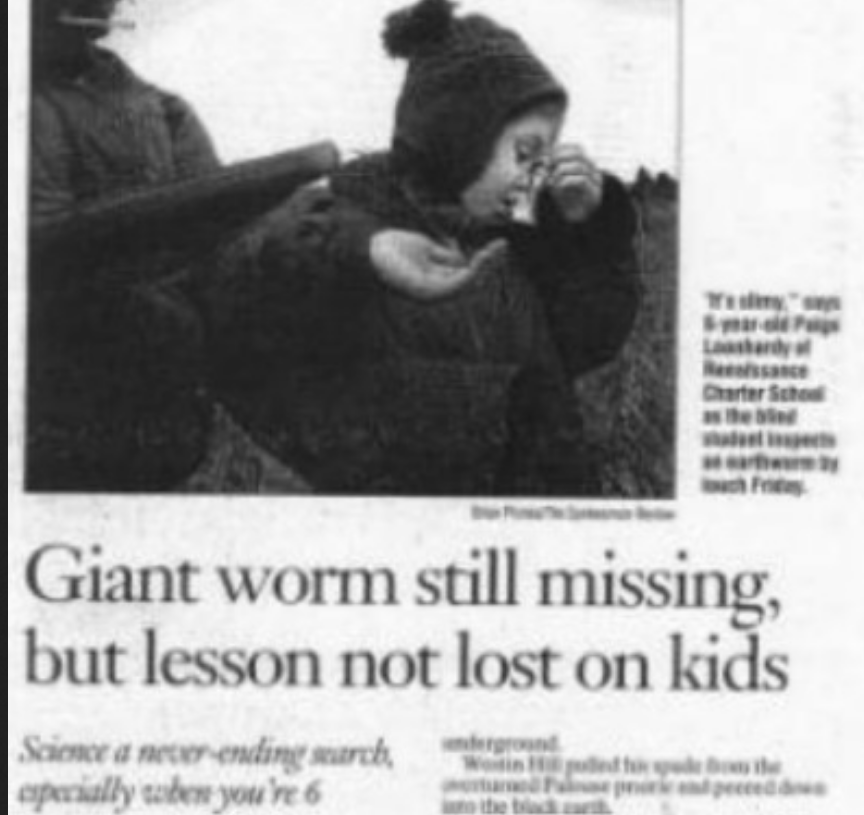
These are some headlines from local papers describing the elusive Driloleirus americanus - the giant Palouse earthworm - potentially the largest North American earthworm and one of the only earthworms that is native west of the Mississippi River, Ozarks, and tallgrass prairies of eastern North America. This iconic animal is closely associated with the Palouse Hills and Palouse prairie ecoregion, a unique and geographically isolated island of prairie hidden in the inland Pacific Northwest; the Palouse is one of the only sizable grassland regions existing west of the Rockies.
Since the soil of the Palouse is much more fertile than that of the drier sagebrush steppe covering most of the interior Northwest, almost all of the Palouse prairie ecology (99% according to some ecologists) has been converted to agriculture, severely threatening the earthworm. The worm was so imperiled by agricultural development that for long period during most of the 20th century, the worm was thought locally extinct across most of its range, hence the breathless headlines about “lost” and “legendary” worms.
Here’s where the worm lives (map via Forest Service; photo via University of Idaho):
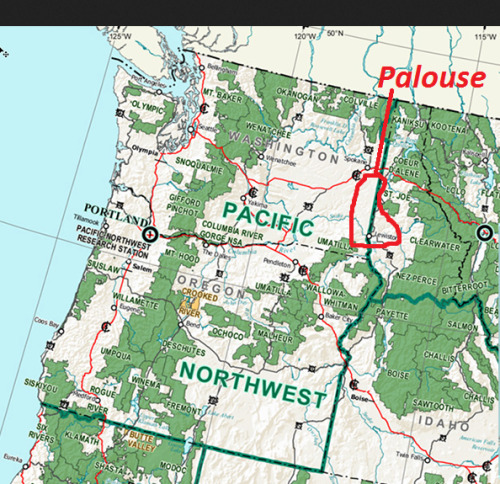
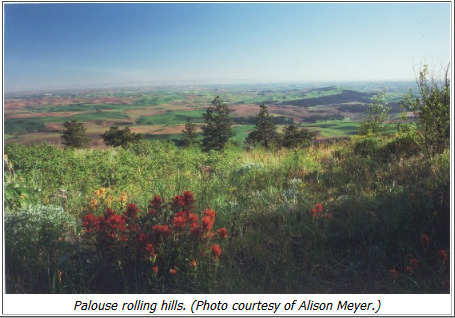
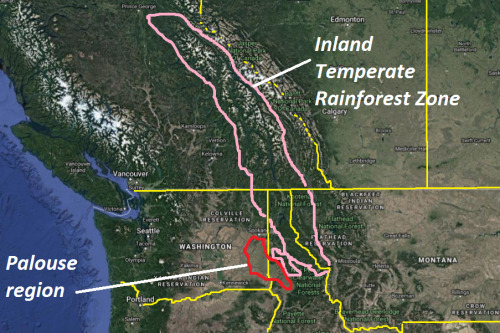
As suggested by its common name (giant Palouse earthworm), the worm is closely associated with the Palouse Hills (sometimes also called the Palouse Prairie), the core of which extends between Spokane in the north and Lewiston in the south. This core region consists of extremely conspicuous and easily recognizable rolling hills. The Palouse grassland region is distinct from the much drier sagebrush steppe to the west which dominates much of eastern Washington; the Palouse is also limited to the east by the mountainous landscapes of the interior cedar-hemlock temperate rainforest of northern Idaho and northwestern Montana.
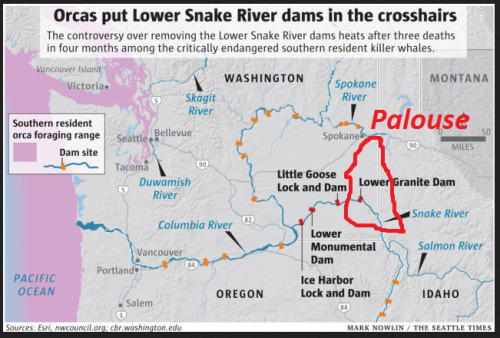
Some maps of the Palouse region (by me. using--surprise, surprise--the working-class GIS aka Microsoft Paint):
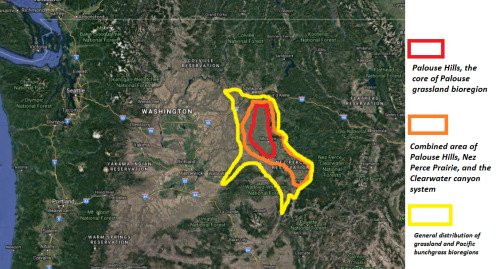
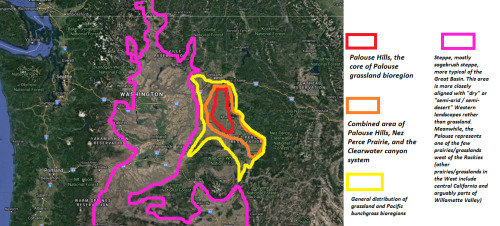
The rest of non-forested eastern Washington is covered mostly by semiarid sagebrush steppe; earthworms don’t like that.
The location of the Palouse prairie region relative to other prairies and grasslands in North America (via USGS):
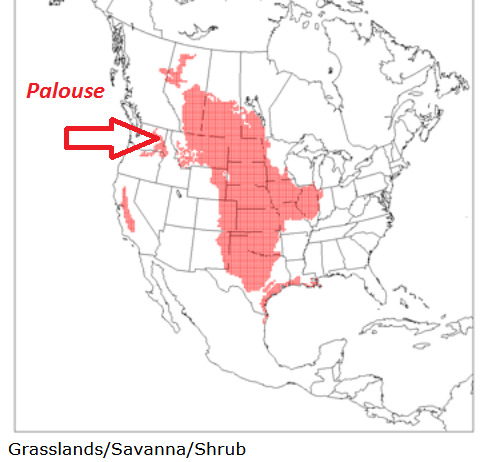
Aside from the Central Valley of California, the Palouse is arguably one of the only sizable grasslands in the western US (much of the US west of the Rockies is more appropriately described as steppe).
Here’s how much of the Palouse core region has been lost to agriculture:
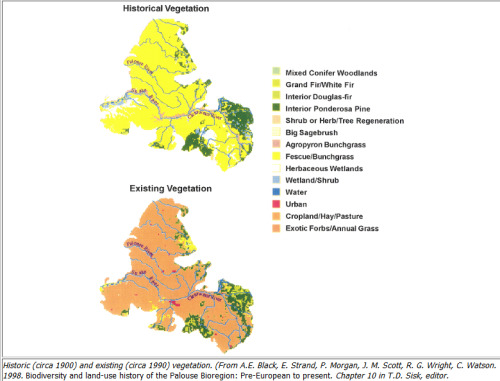
Here’s what the Palouse native prairie should ideally look like, without agricultural degradation: [These photos and graphics come from the older/defunct version of the online portal at Palouse Prairie dot org]:
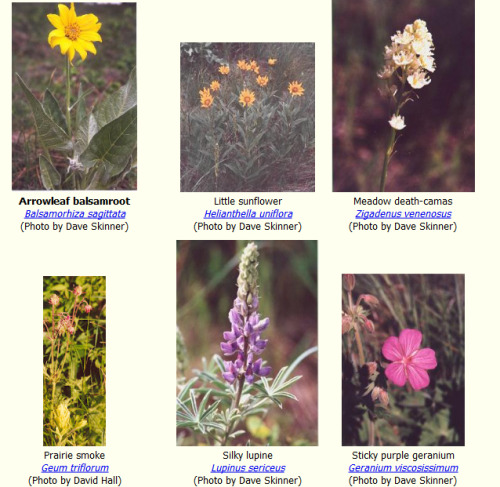
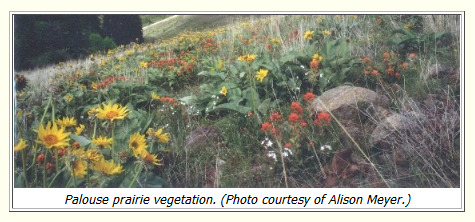
The Palouse isn’t just unique because of its existence as one of the only grassland regions in the dry and mountainous American West; the Palouse is also unique because it is kind of like a little pocket of Pacific Coast-style ecology isolated much farther inland from the ocean (hosting bunchgrass and some Mediterranean California-biome creatures like the ring-necked snake). The lower Snake River and its canyon run directly through the Palouse region; it is this stretch of the Snake that is essential to the health of migrating salmon returning to Columbia headwaters in Idaho’s mountains, and it is this stretch of the Snake that is the subject of activism and popular discourse about removing dams and the health of the Salish Sea’s salmon and resident orcas.
But there exists this nice piece, composed by Cleve Davis for the Journal of Native Sciences:
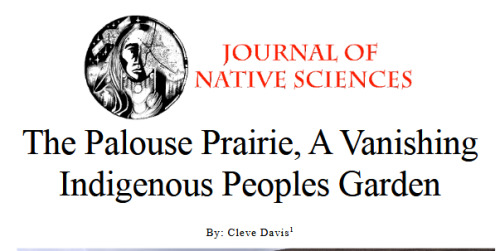
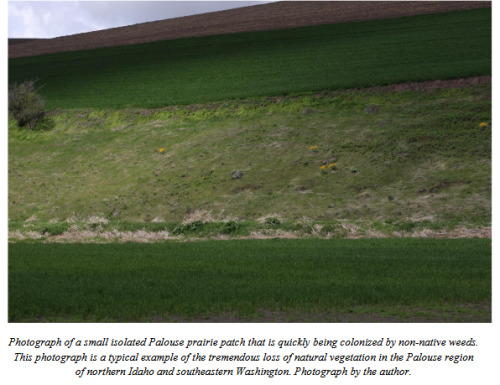
In it, Davis outlines local (Nez Perce, Coeur d'Alene) names for (and uses of) native prairie plant species.
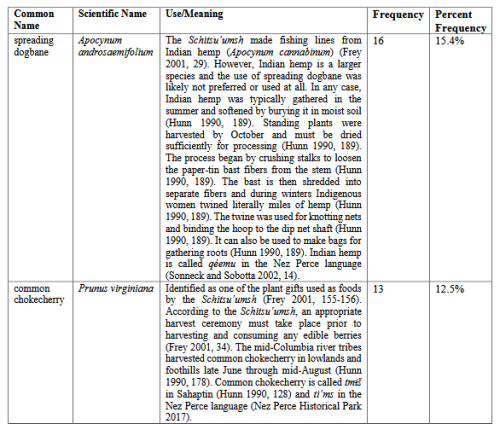
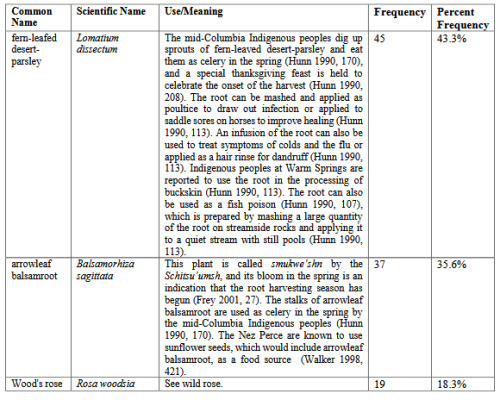
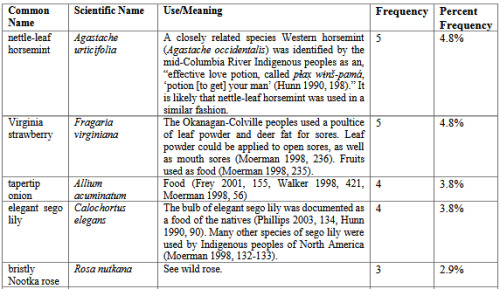
And I recommend checking it out:
Cleve Davis, “The Palouse Prairie, A Vanishing Indigenous Peoples Garden,” Journal of Native Sciences (February 2019).