What changed about sanitation, charcoal, and the notorious 'fever of Constantinople'?: Curious consequences of ecological degradation in the urban history of Ottoman Istanbul

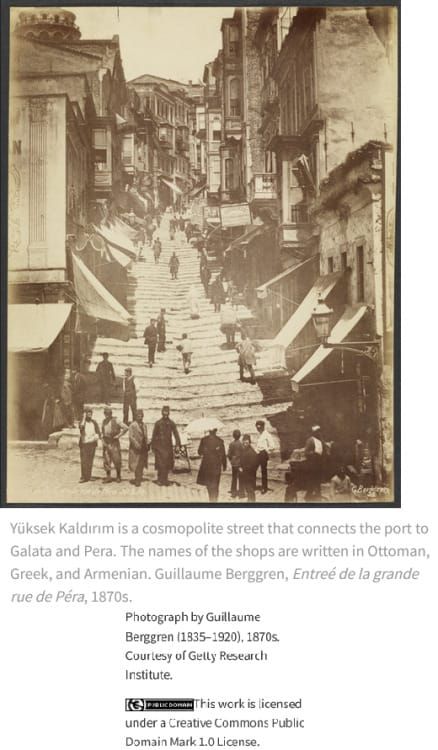
(Originally posted elsewhere on 3 December 2022.)
Piqued my interest. Iwas reading Oziem Sert's 2020 piece in Arcadia.
Interesting example of empire being affected by local specificities of ecological degradation (and nineteenth-century climatic effects of industrialization?).
In Sert's framing:
The publicized, alleged increase of “fever of Constantinople” was not just Orientalist discourse, as the imperial capital was threatened by excessive heat, drought, and regional deforestation marked by disease outbreak. Recent tree-ring data suggests large scale of drought during the century; drought decreased water availability for irrigation and cleaning. The city was forced to pay large sums to import coal from England. In 1829, locally-sourced charcoal prices tripled in one year. The cost of public baths sky-rocketed, making hygiene and sanitation inaccessible. In 1840, a General Directorate of Forests was founded to harvest local timber; within a few years, nearly two-thirds of Kocaeli’s forests were torn down. Simultaneously, the city’s population was quickly rising (500,000 in 1856 to 800,000 in 1885), and rural residents in nearby regions were exhausted by imposed mandatory labor to accommodate the city’s need for fuel.
Anyway, if you want more detail.
--
Excerpt:
Charles MacFarlane, the Scot known for his historical and travel writing, visited Istanbul in 1828. MacFarlane, who suffered for years from “fever of Constantinople” (Brucella) after his visit, mentions how he could not understand why previous observers had described the city’s climate as “pure and healthy” [...]. Ottomanists Daniel Panzac and Nukhet Varlık also point to a “climate of epidemics” referring to other nineteenth-century accounts that showed disease as a boundary marker between Europe and the Orient. Indeed, the city experienced significant infectious disease outbreaks such as that of the plague in 1801, 1811–1812, 1831, 1853, and 1876, and seven cholera outbreaks in 1831, 1847, 1854, 1865, 1870, 1876–1877, and 1893.
What changed? We know that, like other industrial city population movements, dense settlement and inadequate infrastructure worsened health conditions in Istanbul. The number of inhabitants rose from over five hundred thousand in 1856 to over eight hundred thousand in 1885. However, there was also another factor: climate change. The recent tree ring-based hydroclimate June/July precipitation reconstruction of the Old World Drought Atlas confirms a significant decrease in nineteenth-century precipitation values. [...]
---
Drought worsened living conditions. It turned rivers into marshland and decreased available water sources for turning water mills used for irrigation and cleaning. Waterborne diseases such as diarrhoea and cholera increased. Excessive heat, swamps, and deforestation triggered the spread of vector-borne diseases such as malaria. Moreover, water scarcity worsened sanitary conditions. Diseases that are transmitted from animals to human beings through direct or indirect contact by contaminated food (often milk products), like Brucella (fever of Constantinople, Malta fever, or Mediterranean fever), also increased.
---
The stress on the economy was also enormous. Excessive heat affected load-bearing animals and people, making transportation more difficult. [...] Extremely hot conditions increased the stress on seafaring oarsmen. A lack of sufficient charcoal and firewood resulted in ships being fuelled with coal from England, which was costly. Problems of transporting wood and the cumulative long-term effects of deforestation made firewood supplies an enormous issue. The Ottoman state set prices and imposed mandatory labour on rural regions, which absorbed the burden of providing food, firewood, charcoal, and construction material to Istanbul and the city’s palace. Charcoal, which had previously been supplied as taxes from villages in some Balkan countries after the Russian War, was not available. As a consequence, charcoal prices rose from 3.8 Akçes in 1829 to 13.6 Akçes in 1830. In the second half of the century, numerous fires, some of which coincided with scorching temperatures, increased timber demand and prices multiplied.
---
The state took measures against this severe firewood shortage. Necessary institutional action was taken. Laws were changed to regulate the organization of forests under the General Directorate of Forests founded in August 1840. And silviculture was established. Once supply from the Balkans was no longer forthcoming, the stress on regional supplies increased. The demand for timber from Kocaeli, a neighbouring district located east of Istanbul, was almost four times higher. Nearly two-thirds of forests were cleared by 1847. Life became desolate for villagers; some even sold their buffaloes to relieve themselves of the burden to supply wood. Until Ottoman coal began to arrive from Zonguldak on the Black Sea in 1850, Istanbul’s firewood and coal supply was a significant problem.
---
Firewood and water scarcity increased the cost of public baths, which were essential for the well-being and health of inhabitants. The number of public baths did not increase in line with the doubling of Istanbul’s population. [...] For example, during the 1811–1812 plague, ship crews carrying firewood and charcoal as well as food to Istanbul fled the city. This increased labour and transportation costs. Some public baths, whose furnaces were heated with charcoal and firewood, went bankrupt. [...]
---
The first municipal institution (Şehremaneti), founded in 1868, was given the urgent mandate of ensuring public hygiene. The effect of climate change on the landscape, economy, and institutional changes was significant. Indeed, climate is an important factor to consider for the history of the era. Disease was not only a result of Orientalist discourse. Environmental conditions also changed Istanbul’s healthscape. Thus, unbeknownst to Charles MacFarlane, the discrepancy between the earlier accounts of Istanbul and his own experiences can, at least partly, be ascribed to climate change.
---
Image, caption, and text by: Özlem Sert. “Water, Firewood, and Disease in Nineteenth-Century Istanbul.” Environment & Society Portal, Arcadia no. 45. Rachel Carson Center for Environment and Society. Autumn 2020. [Emphasis mine.]