Deliberately avoiding efficiency to preserve social/colonial hierarchy in the case of the Dutch commodification of cinnamon in Sri Lanka: Contextualizing a joke-y meme about administrative infighting
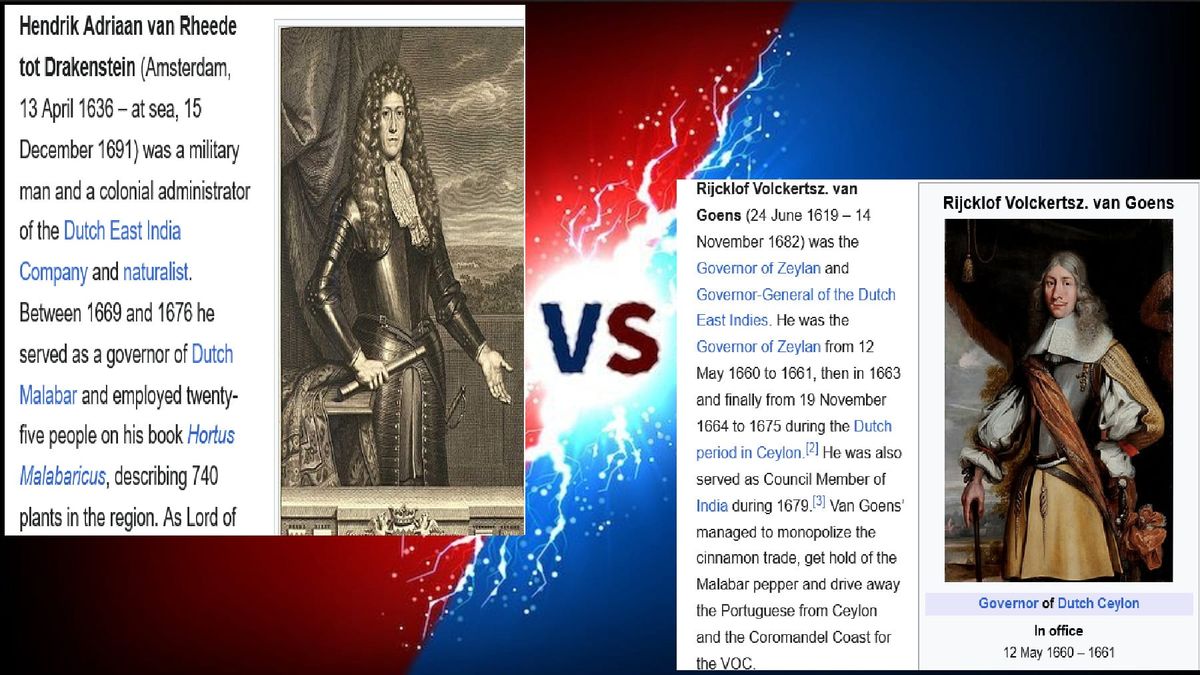
(Originally posted elsewhere on 13 July 2023.)
I made this for a discourse on imperial science:
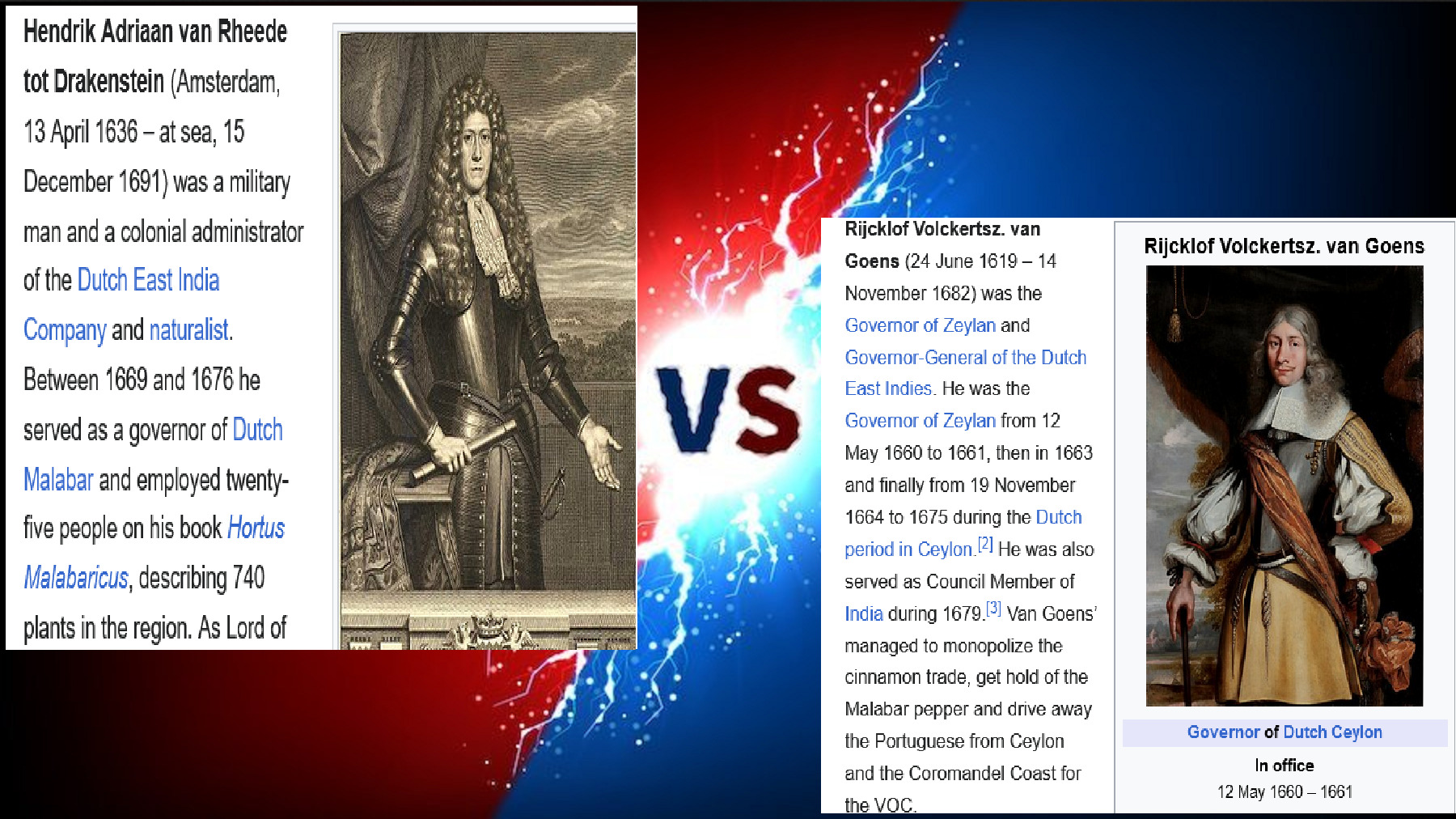
Captioned it: “Dutch imperialist infighting. Inadvertently undermined by his own earnest protege.”
But maybe worth contextualization!
So I’ll merely suggest the text of scholar Walter Klein.
There are other implications at play here: the ascription of the ambiguous moniker of “true” or “pure” to plant cultivars as more of a marketeering label rather than a botanical/ecologically-meaningful term (kind of like the ambiguity of the classification of “a weed”); the significance of eighteenth-century colonial botany to Dutch, Russian, French, and British powers alike; the coerced labor of local residents.
Though what’s fascinating here is how Van Rheede’s botanical research in India/Sri Lanka and his well-meaning promotion of “good science” which ostensibly would allow cheaper production of highly-prized cinnamon (something a colonial power might, at first glance, theoretically want?) was actually irritating to a governor like Van Goens, who rather preferred to deliberately maintain rarity/exclusivity of a commercial product because that rarity ensured continued Dutch dominance on the island (and, by extension, continued rarity and resultant profits, by bolstering Dutch authority, also therefore preserved Van Goens’ own position in the social hierarchy, since he was governor).
Anyway, the way that Klein frames the tension between these two administrators is interesting. Text below is his.
—
Excerpt:
Because most medicines were produced from […] mainly plants […] these early “pharmaceutical monopolies” required full control of the production and trade of a species. […] “True” cinnamon grew only on Sri Lanka, so whoever controlled the island could dominate the cinnamon trade. The Portuguese were the first to create a monopoly on the cinnamon trade there in the early seventeenth century. That monopoly was later optimized by the Dutch in the late eighteenth century […]. “True” should indeed be in quotation marks here – the term reflects the historically contingent tastes of Europeans, rather than any botanical category […]. The rarity of cinnamon in the early modern period made it one of the most coveted spices of that era […]. In the early modern period, cinnamon was also important both as an exotic commodity and as an important therapeutic substance. The Dutch East India Company (VOC), which controlled Sri Lanka between 1658 and 1796, was well aware of this. The VOC vigorously exploited the Salagama – […] specialized Sri Lankan cinnamon peelers – to supply enough cinnamon, which for a long time was gathered from forests. Only after the peelers rebelled, leading to a war that lasted between 1760 and 1766, did the company revise its production policy. Experiments with “cinnamon gardens” (kaneeltuinen in Dutch) led to enormous successes, and the company eventually grew millions of cinnamon trees on plantations in the final decades of the eighteenth century. […]
Hendrik Adriaan van Rheede tot Drakenstein (1636–1691) was the VOC administrator on India’s Malabar Coast when he started experimenting with cinnamon oil in the 1670s. He concluded that the oil, which he extracted from the roots of local cinnamon trees, was of better quality than oil from cinnamon trees on Sri Lanka. Van Rheede reported these results in his entry on cinnamon in volume 1 of the Hortus Indicus Malabaricus […].
Van Rheede’s assessment of cinnamon – in fact, the very publication of a multi-volume work about the flora of Malabar – infuriated the governor of Sri Lanka, Rijckloff van Goens, who had secured the cinnamon monopoly of Sri Lanka for the Dutch. Van Goens insisted that Van Rheede stop his medical experiments, claiming that the monopoly was at risk if the cinnamon trade was extended beyond the island of Sri Lanka.
But Van Goens was not so much concerned about the therapeutic efficacy of cinnamon from either of the two regions. He was motivated by an imperial agenda and regarded the natural products of Sri Lanka as superior to anything similar in the region.
The experiments of Van Rheede, who was his former protégé, threatened not so much the botanical quality of the product, or the commercial interests of the Dutch East India Company, but rather the central position of Sri Lanka in the Dutch colonial system and the position of Van Goens as the representative of that system.
Even when Sri Lanka still only produced cinnamon that grew in the wild, the Dutch harvested enough to supply an international market and were able to dictate the availability and price level throughout the world. The monopoly, whether defined in commercial or pharmaceutical terms, was not easily put at risk by efforts like Van Rheede’s. Those involved in the early modern cinnamon trade were motivated by various reasons to defend or undermine the central position of Sri Lankan cinnamon: botanical, medical, commercial, or imperial. These motives often overlapped.
Text by: Wouter Klein, “Plant of the Month: Cinnamon,” JSTOR Daily (17 February 2021). URL: https://daily.jstor.org/plant-of-the-month-cinnamon/ [Emphasis mine. The “Plant of the Month” series is part of the Plant Humanities Initiative, a partnership of Dumbarton Oaks and JSTOR Labs.]