Distinguishing between the Chinese and Indian models of British labor coercion at tea plantations: Subordinating labor to nationalism in twentieth-century India

(Originally posted elsewhere on 2 May 2023.)
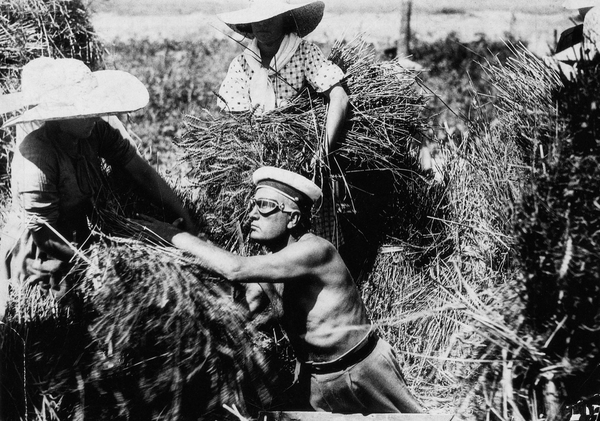
I was reading about the Chargola Valley workers' strike of 1921.
This compelled me to go look at more context. And I was happy to encounter new-to-me framing from historian Andrew Liu.
As this is an interview, I think his tone makes it succinct and accessible, so I'll leave it to his words.
--
Excerpt:
Yes, it is critical to acknowledge the centrality of Britain to the world economy in order to understand how Chinese and Indian tea fitted into it. [...] Asian tea relied on forms of employment [...] such as independent family farms in China and indentured ‘coolies’ in India. [...] It would be very difficult to explain how and why Asian tea became driven by the modern dynamics of accumulation then, unless we connect China and India to the broader global division of labor, centered on the most cutting-edge industrial sectors in the north Atlantic. [...] But I also wish to reframe the idea of British capital as “protagonist,” because when we think about capital, agency is a weird thing. [...] Nothing about accumulation is inherently loyal to this or that region, though it has been concentrated in certain sites, such as nineteenth-century Britain or twentieth-century US, and it has been territorialized by nationalist institutions. Thus, although British firms drove the Asian tea trade at first, by the twentieth century Indian and Chinese nationalists alike protested British capital [...].
Most economic histories were focused on whether other countries could ever develop into nineteenth-century England. For labor historians, Mike Davis recently wrote, the “classical proletariat” was the working classes of the North Atlantic from 1838-1921. These modular assumptions jump out when you flip through the classics of Asian economic and labor history, almost always focused on some sort of textile industry (silk, cotton, jute) and in cities such as Shanghai, Osaka, Bombay, Calcutta. By contrast, I was really inspired by a field pioneered by South Asia scholars known as “global labor history” — especially the work of Jairus Banaji — which has been critical of the centrality of urban industry in economic history. Instead, these scholars reconsider labor in light of our current world of late capitalism, including transportation workers, agrarian families, servants, and unfree and coerced labor. These activities have enabled global capitalism to function smoothly for centuries but were overlooked because they did not share the spectacular novelty of the steam-powered factories of urban Europe, US, and Japan.
As far as how tea production worked: in simple terms, Chinese tea was a segmented trade and Indian tea was centralized in plantations known as ‘tea gardens.’ The Chinese trade relied on independent family farms, workshops in market towns, and porters ferrying tea to the coastal ports: Guangzhou (Canton) then later Fuzhou and Shanghai. By contrast, British officials and planters built Indian tea from scratch in Assam, which had not been nearly as commercialized as coastal China or Bengal. They first tried to replicate the ‘natural’ Chinese model of local agriculture and trade, but frustrated British planters ultimately decided to undertake all of the tasks themselves, from clearing the land to packaging the finished leaves. [...] Indian tea was championed as futuristic and mechanized. [...]
In India [...] the tea industry’s penal labor contract became one of the original cause célèbres of the nationalist movement in the 1880s. The plantations later became a site for strikes and hartals, the most famous occurring in the Chargola Valley in 1921. But even though tea workers chanted, “Gandhi Maharaj ki jai” at the time, Gandhi himself had allegedly visited Assam and declined to see the workers, meeting instead with British planters to assure them they were safe. While Indian nationalists had politicized indenture in Assam tea, their main complaint was the racialized split between British capital and Indian labor. Their remedy was not to liquidate the tea gardens but to diversify ownership over them. The cause of labor was subordinated to the nationalist struggle.
---
All text above, words of Andrew B. Liu. As interviewed by Mark Frazier. Transcript published as “Andrew B. Liu - Tea War: A History of Capitalism in China and India.” Published online by India China Institute. 23 March 2020.