Invasive worms--and what is 'savannification'? (part 1 of 2): Explaining earthworms and environmental histories (with maps!) of the prairie-woodland boundary in the Northern Plains and Northwoods
(Originally posted elsewhere on 3 December 2019.)
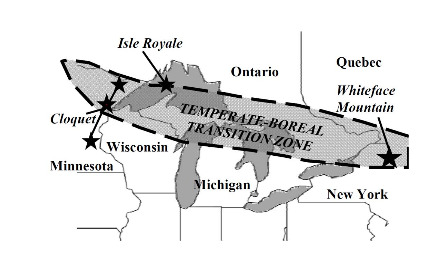
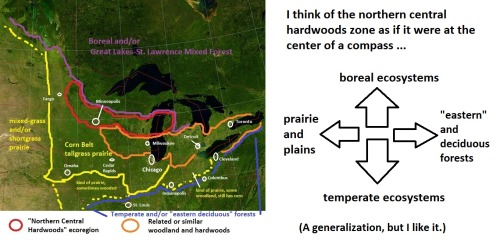
More on worm invasion, regarding “savannification” and why the transition zone between boreal forest and temperate woodlands near the “northern central hardwoods forest ecoregion” of Minnesota, Wisconsin, and Michigan is a critical region for minimizing the damage from the northward expansion of non-native earthworms: Since non-native worms have been seemingly omnipresent and well-established across temperate North America - for several centuries, in many places - it’s worth noting that there is still potential future damage that might be mitigated by human action against worm expansion. Apparently, non-native earthworms can contribute significantly to devegetation of boreal and mixed forest near Minnesota’s Boundary Waters region, and the expansion of tallgrass prairie and oak savanna into previously boreal climates and forested landscapes. There’s a good reason that so much earthworm ecology research is based at schools in Minnesota, Michigan, and Ontario. So here are some more horrible map abominations I made with the beloved program M!crosoft Paint (the working-class GIS, lol) regarding the danger of worms in Great Lakes, Midwest, and boreal ecosystems.
I made this map to help situate the region. Sorry that it's so shitty.
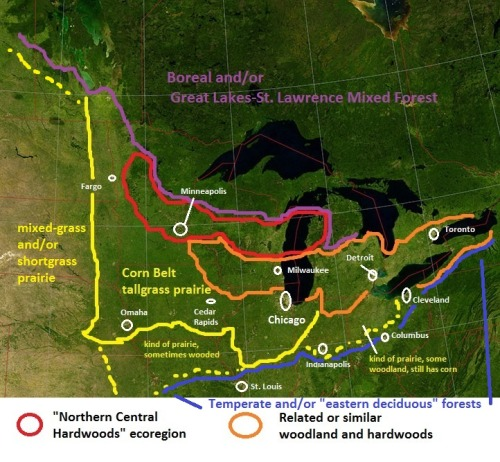
Here, I added all the annoying labels/text:
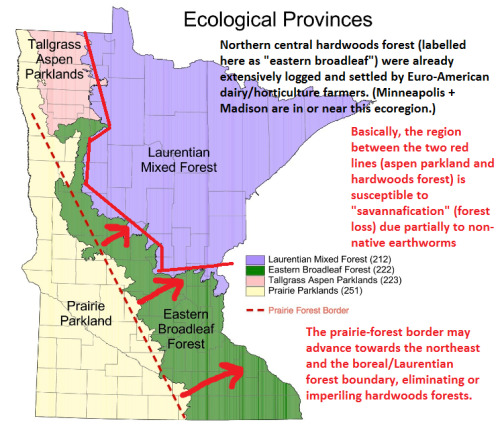
For context:
European earthworms, principally the nightcrawler (Lumbricus terrestris), leaf worm (Lumbricus rubellus), and angleworms (Aporrectodea spp), are invading forests along the entire prairie-forest border, including boreal forests from Alberta to northern Minnesota, and hardwood forests from Minnesota to Indiana. The northern part of the prairie-forest border, from northern Wisconsin through Alberta, has no native earthworms.
From an influential paper: Lee E. Frelich and Peter B. Reich. “Will environmental changes reinforce the impact of global warming on the prairie-forest border of central North America?” Frontiers in Ecology and the Environment (2009).
They include this very helpful illustration:
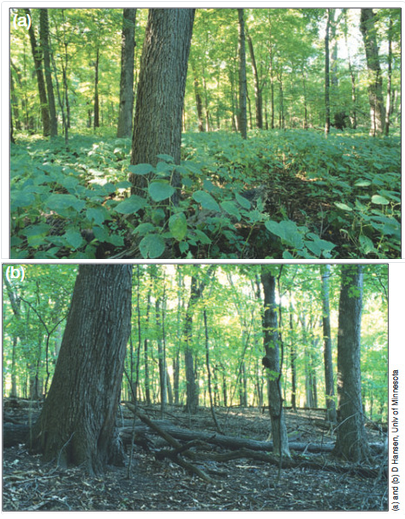
And Frelich and Reich attach this caption:
Forest change caused by earthworm invasion and deer grazing. (a) Intact forest of sugar maple, basswood, and red oak. (b) Forest with high deer population and earthworm invasion. Note the absence of tree seedlings, herbs, and duff on the forest floor.
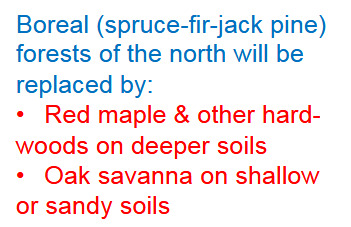
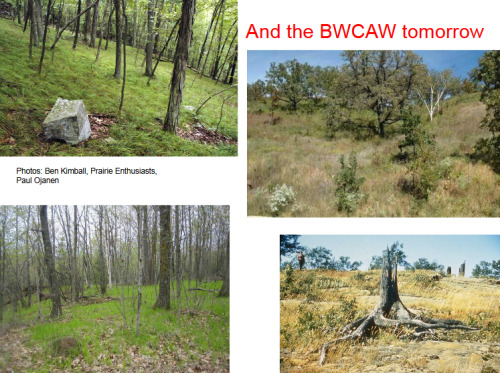
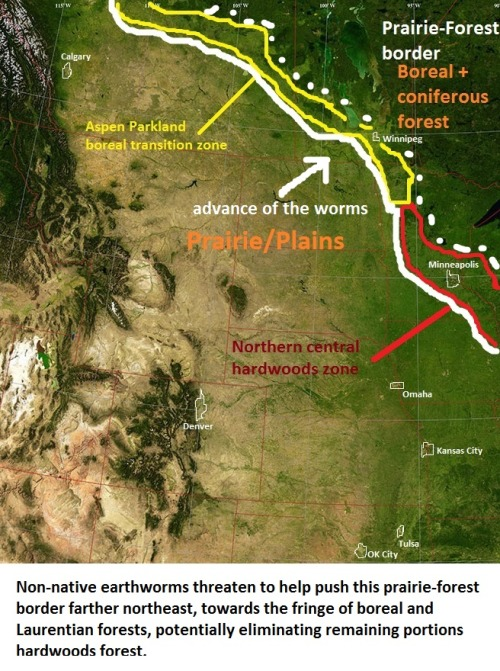
“Savannification” of North America’s northern prairie-forest border zone (in Minnesota, Manitoba, Saskatchewan, and Alberta) is soon expected to increase significantly due to the combination of climate crisis; industrial monoculture; white-tailed deer overabundance and overgrazing; and introduced exotic earthworm species. In other words, aspen parkland and northern central hardwoods forest, in the region where boreal biomes meet temperate biomes near Winnipeg, could be converted into savanna.
More maps from me, sorry:
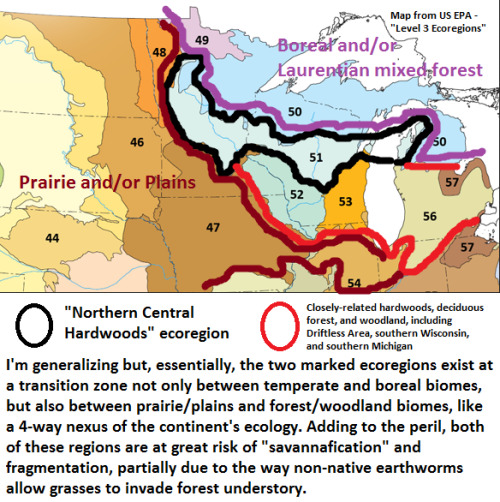
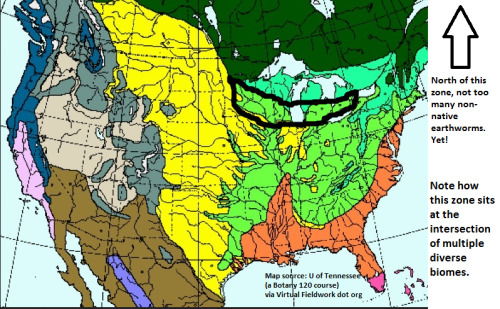
One major reason for forest loss and the encroachment of savanna is the death of the understory and forest floor of northern central hardwoods environments in Minnesota and Wisconsin; the way the non-native earthworms destroy understory plants allows the related encroachment of grasses in their place (creating a self-sustaining cycle and advancement of prairie/woodland replacing forest).
You can kinda see that transition zone on satellite imagery:
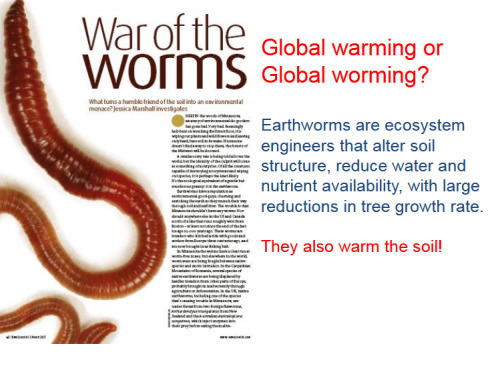
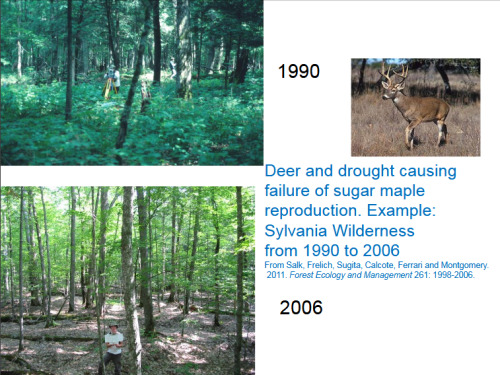
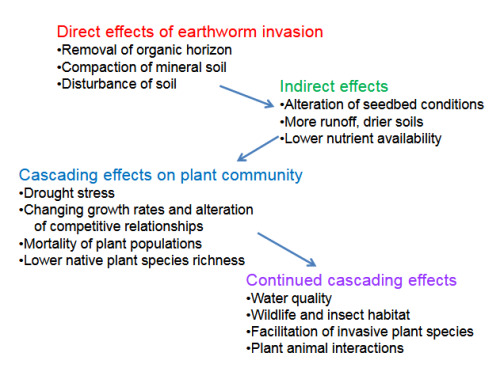
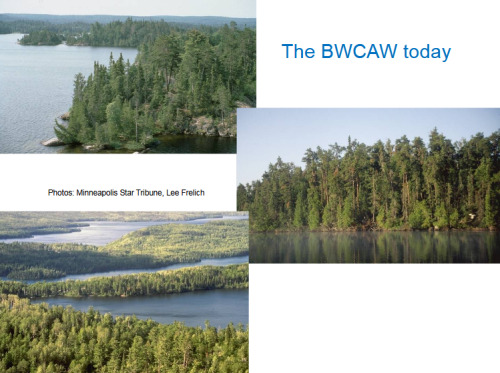
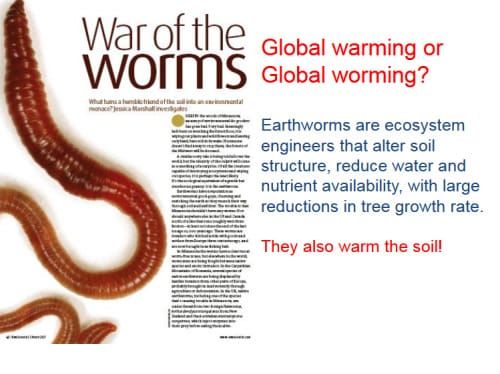
Elsewhere, Frelich gave a presentation with some helpful slides.
These come from: Lee Frelich, “Climate change and forests: maple, spruce, or savanna?” for University of Minnesota.