Hanford toxicity, Indigenous communities, and legacies of extraction in the in the inland Pacific Northwest
(Originally posted elsewhere on 13 May 2020.)
Hanford has been in the news in The Spokesman-Review (inland Northwest, based in Spokane).
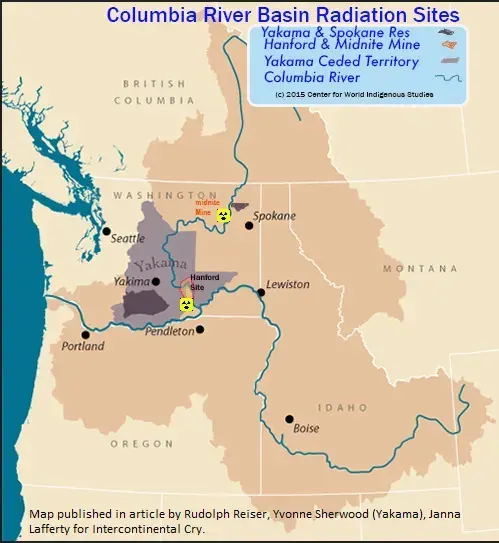
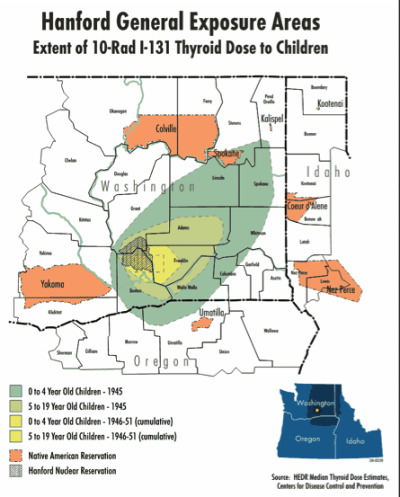
So I wanted to make the context more animate by considering some actual photos/maps of the site which I’ve appended here alongside excerpts from: Anita Moore-Nall, The Legacy of Uranium Development on or Near Indian Reservations and Health Implications Rekindling Public Awareness,” MDPI: Geosciences, vol. 5, Special Issue 1: Medical Geology: Impacts of the Natural Environment on Public Health (2015), pages 15-29.
“During the period from 1944 to 1972 Hanford released 25 million curies of radioactive contamination into the environment as a comparison the Chernobyl plant released between 35 and 49 million curies of iodine-131 (I-131).” (Moore-Nall, 2015)
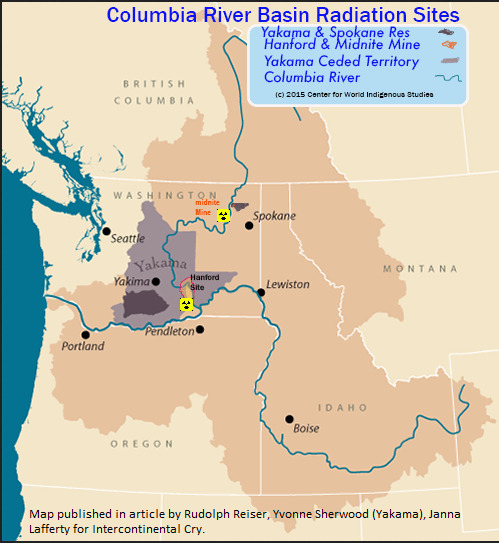
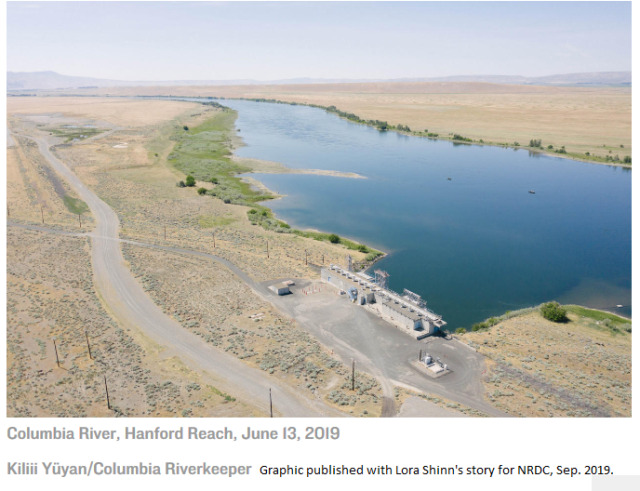
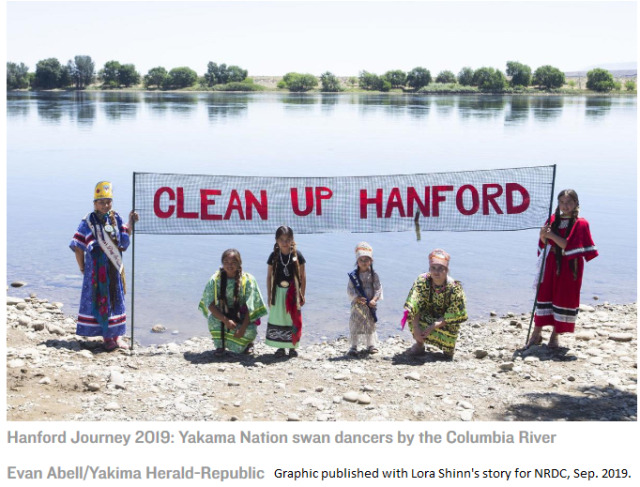
“Five of the reservations, the Colville Confederated Tribes, Spokane, Kalispel, Kootenai, and Coeur D’Alene are primarily downwind of Hanford Nuclear site’s 1450 square kilometer area […] and would have been exposed to the airborne release of radioactive contamination for the most part normal by-product of chemical reactions used to separate weapons-grade plutonium from enriched uranium reactor rods, i.e., I-131 with less of a contribution of the river borne releases. The other four reservations, the Nez Perce, Confederated Tribes of the Umatilla, Confederated Tribes and Bands of the Warm Springs and the Yakama Nation are known to consume large quantities of fish and likely received higher doses of river borne releases which resulted from both accidental releases and normal operations that used Columbia River water to cool weapon-production reactor cores.” (Moore-Nall, 2015)
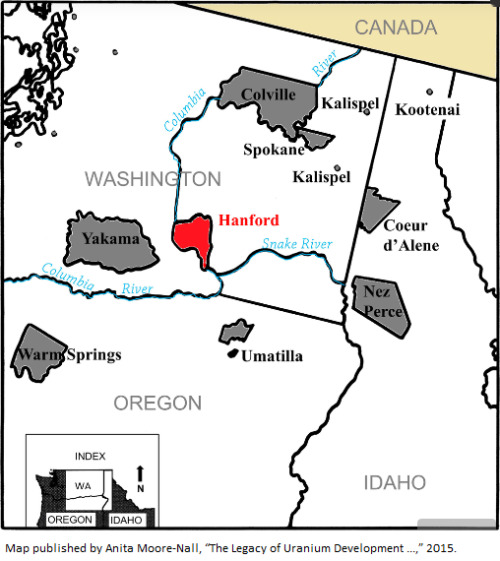
“The people of these reservations traditionally used and continue to use the lands and resources from the Columbia River Plateau region including land that was ceded to the government for which they retained hunting and gathering privileges. Thus, they may have been exposed to more radiation and contaminants than the general public in practicing traditional lifestyles while fishing, hunting game, food gathering (berries, root plants, etc.) harvesting medicinal plants and traditional practices […], as well as social and spiritual interaction networks. This region was contaminated by Hanford activities through primarily two distinct forms: airborne and river-borne releases, both normal operations and some accidental releases. […] Additionally, liquid waste that had been poured onto the ground or held in ponds or trenches at the Hanford reservation evaporated or soaked into the soil on the site. The waste contaminated some of the soil and is thought to have also created underground “plumes” of contaminants which could also affect the tribes who consumed native food sources in the area.” (Moore-Nall, 2015)
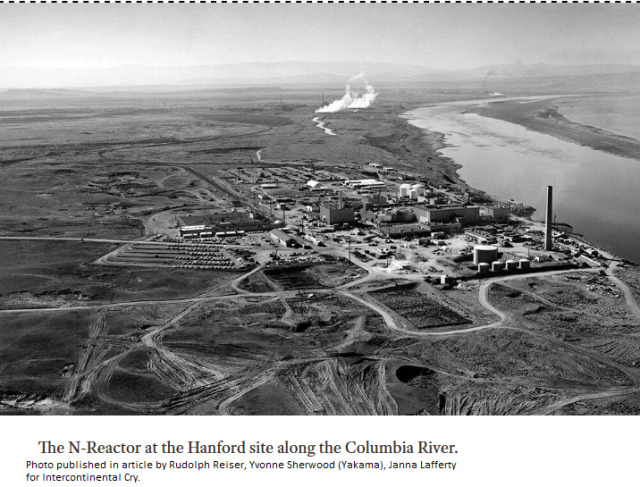
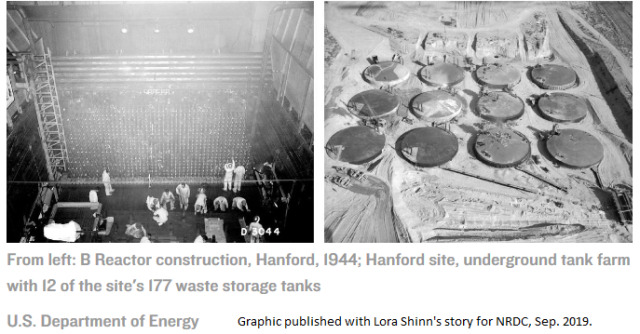
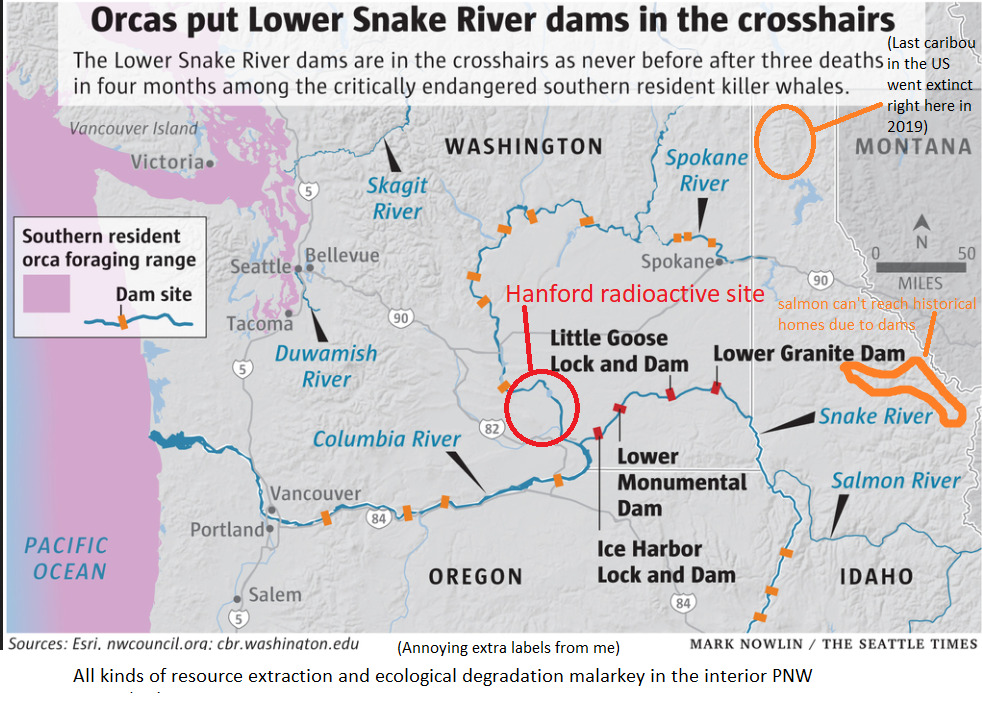
All kinds of resource extraction and ecological degradation in the interior PNW:
Dams on the Lower Snake preventing salmon access to the Clearwater watershed and the Boise-area Snake River; dams on the Upper Columbia preventing salmon and white sturgeon access to Kootenay region; dams on the Lower Columbia preventing Native access to healthy salmon resources at the Dalles; orcas of the Salish Sea harmed by salmon population decline; radioactive soil and water related to Hanford; uranium mining legacy at Colville west of Spokane; the destruction of 99.9% of native grassland in the Palouse Prairie ecoregion for agriculture; the Sinixt people unable to cross the US-Canada border; mountain caribou of the Selkirks disappearing, making caribou extinct in the contiguous US in 2019.