'Illicit socializing' and 'limits of empire' in margins of power: Reviews about Brazilian backlands (Langfur) and Caribbean ports (Scott)

(Scott review originally posted about elsewhere on 19 March 2024. Langfur review originally posted about elsewhere on 21 April 2024.)
Two scholars, as reviewed by two other scholars. Put side-by-side by me (decidedly not a scholar, sorry; I'm a night-shift retail employee!).
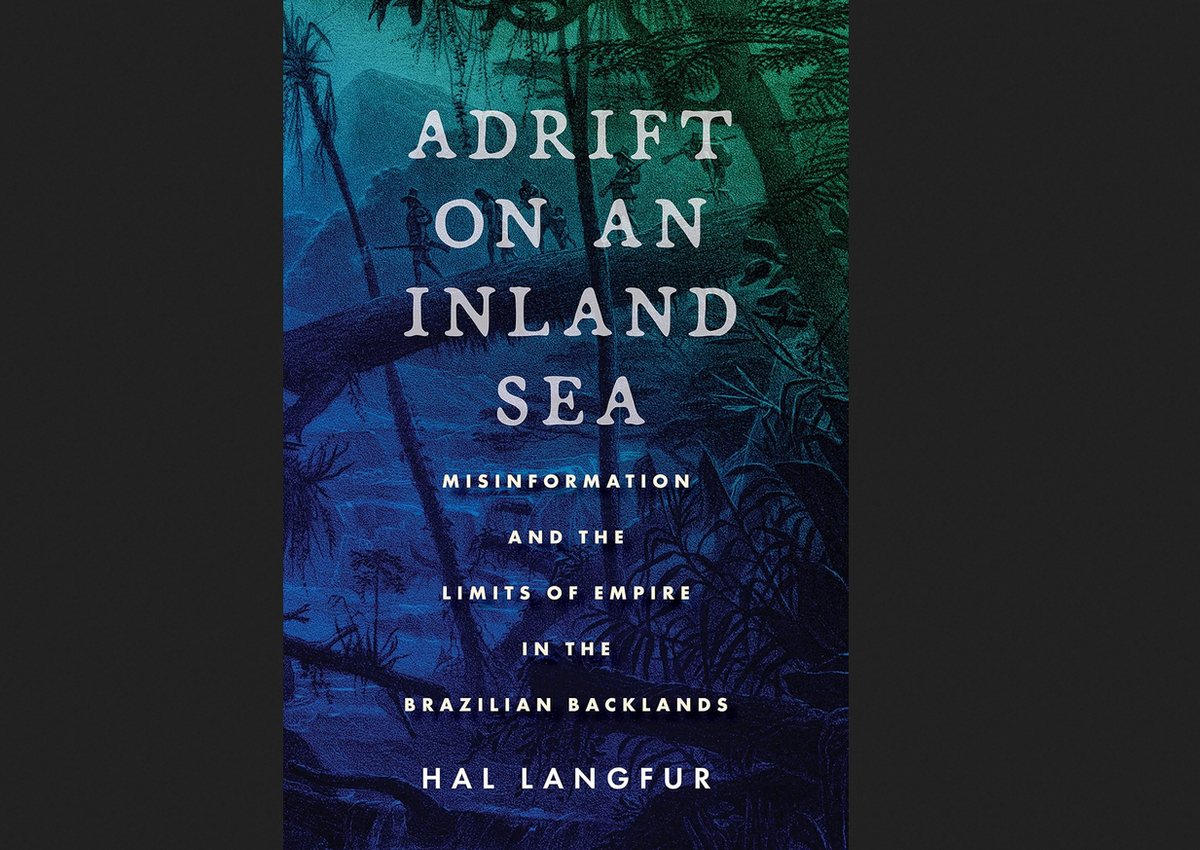
Here, Natasha Lightfoot (in The American Historical Review) reviews Julius Scott's The Common Wind in The American Historical Review, while Adriana Johnson (at H-Net) reviews Hal Langfur's Adrift on an Inland Sea: Misinformation and the Limits of Empire in the Brazilian Backlands.
--
Excerpt 1:
Julius Scott’s legendary study tells [...] of the unrest of “masterless” communities, as he terms them, in the late eighteenth-century Caribbean and its implications for the Atlantic World. This unrest was undergirded by what he terms a “common wind” of seditious political news circulating through an increasingly mobile and interconnected region. He deftly sets the context [...] to imperial tensions that culminated in uprisings and revolutions within [...] the French, British, and Spanish Empires. [...] He builds what is this field-defining work from a triangulated analysis of three central hubs of the colonial Caribbean in terms of [...] prosperity in the plantation economy, and political importance to these aforementioned empires: Saint-Domingue [Haiti], Jamaica, and Cuba. But he also explores similar occurrences within [...] Martinique and Guadeloupe for the French, Venezuela and Trinidad for the Spanish, and Dominica and Grenada for the British. He also includes [...] the engagement of the newly formed United States in this network, reinforcing the broader Atlantic impact of the common wind’s radical currents.
Chapter 1 explores the upheaval afoot in the mid-1700s colonial Caribbean through a closer look at the movements of a range of actors including enslaved runaways, military deserters, contraband smugglers, free people of color, and poor whites hustling in the islands’ urban centers and surrounding countrysides. A variety of settings - including the fringes of plantations, maroon settlements, town-based markets, taverns, hospitals, barracks, and wharves - might presumably, if read with the archival grain, illuminate the map of state control. Instead, in Scott’s analysis, these represent the contours of the working class’s unlawful movements and ultimately their fraying of the colonial order, anticipating what Stephanie M. H. Camp [...] would aptly name [...] the “rival geography” of slave society.
Chapter 2 shows how sailors’ illicit forms of mobility [...] blurred the bounds between land and sea in this narrative of popular dissent. Their movements [...] as social beings and political dissidents bled into and helped sustain similar kinds of illicit commerce and socializing [...]. Chapters 3 and 4 demonstrate how the common wind consistently blew subversive ideas into and around the Caribbean, much to officials’ chagrin. Scott here homes in on the politically volatile era from the late 1770s through the late 1790s, which saw declarations of war, drastic changes in slavery policy [...] and the emergence of U.S., French, and, most significantly, Haitian revolutionary uprising. [...] [E]nslaved communities everywhere in the region followed as intently as they could as the campaign of the enslaved rebels in Saint-Domingue began in 1791. [...] Political news, no matter how hard officials in the colonies and the metropoles tried to block it, spilled into all levels of society [...]. What flowed through all of these channels animated questions about master-slave relations, mercantilist policy, individual rights [...]. Scott carefully traces the influence of the unfolding Haitian Revolution on well-planned but eventually thwarted uprisings of enslaved people in the Venezuelan port city Coro, the Dutch colony of Curaçao, and the parish of Pointe Coupee in then Spanish Louisiana, all in 1795. He also illuminates the multiple instances of inspiration in the 1790s evidenced in enslaved communities throughout the United States [...]. Essentially Scott reveals that the Age of Revolutions cannot be understood without comprehending black resistance in times of war and peace. The tale of Phebe, one of many enslaved Jamaican female runaways who became an itinerant higgler hiding in plain sight in urban spaces like Kingston, or the story of the 1790 mutiny of four enslaved sailors who overtook the Saint Kitts sloop the Nancy with respective origins in the Caribbean, West Africa, and the U.S. South, which Scott called a “microcosm” of the Atlantic, are but two of multiple narratives he includes to show that enslaved people [...] actively built and sustained those circuits via their multilingualism, their savvy, and above all their dedication to achieving a state of masterlessness [...].
All text above by: Natasha Lightfoot. "The Common Wind: A Masterful Study of the Masterless Revolutionary Atlantic". The American Historical Review, Volume 125, Issue 3, pages 926-930. June 2020. At: doi dot org slash 10.1093/ahr/rhaa230 [Emphasis mine.]
--
Excerpt 2:
Hal Langfur's Adrift on an Inland Sea: Misinformation and the Limits of Empire in the Brazilian Backlands sheds valuable light on spaces and processes in the history of colonial Brazil that have been overlooked and understudied, namely those taking place in internal frontier zones - the sertões, or backlands, between and beyond the enclaves governed by Portuguese rule, unstable and unincorporated spaces [...]. Langfur argues that [...] Lisbon made increasingly assertive efforts to survey and establish control over isolated zones after 1750 but that these failed such that the Portuguese imperial state found itself “adrift on an inland sea.” [...] [T]he axis on which this enterprise fails is information. People made up the infrastructures of communication and data transmission that the Portuguese Empire endeavored to construct and deploy in order to render its domains governable and ever more profitable, but these people had purposes of their own. The probing tentacles of imperial intelligence gathering met instead with the confusion of rumors, distortions, inflated claims, conflicting reports, disputed facts, and fantasies. [...]
[Langfur] bring[s] into the conversation [...] accounts of several forays between 1750 and 1820 into the backlands of Minas Gerais [...]. These took place against the exhaustion of the mineral deposits that had fueled the gold rush decades earlier in Minas Gerais and the crown’s relentless pursuit of new deposits that could keep up the flow of alluvial wealth. While these projects foundered, ultimately, new forms of extraction in the form of slave-based export agriculture (coffee) would take their place. [...] [T]he first expedition was led by an ambitious merchant named Inácio Correia Pamplona in the late 1760s who commissioned a scribe to record a diary and compose poems praising his attempts to find gold and subdue Indians and thus extend the empire’s territorial dominion. While Pamplona’s actual accomplishments fell short of the Herculean feats described [...], he was able to cash in his narrative for favors and privileges that made him one of the largest landholders in the captaincy. [...] The third [expedition] involved José Vieira Couto, a crown-appointed mineralogist, who was appointed to use his scientific expertise to investigate reports of diamond strikes in Western Minas Gerais, particularly of a famed free Black prospector known as Isidoro de Amorim Pereira [...]. The hoped-for diamonds never materialized but Couto [...] deployed a discourse of scientific rigor in an attempt to recast his mission and produce knowledge that would allow the crown to absorb and exploit the territory. [...] Wied established himself as an authority with unrivaled knowledge of Botocudo peoples for an international reading public; his accounts [...] presented the Botocuda as exotic primitives, incommensurable with “civilized society,” [...].
---
If these expeditions [...] did not accomplish what the colonial state intended, this was, Langfur argues, a result of the capacity of diverse inland actors to divert, co-opt, and deceive authorities. [...] [Langfur's study] turns on an emphasis of the unacknowledged agency of a variety of marginalized peoples who acted as knowledge brokers: indigenous communities, both enslaved and free Afro-Brazilians, itinerant poor, and others deemed vagabonds and criminals: “the Indigeneous inhabitants separating the colony’s burgeoning capital from its mining heartland retained considerable say over the crown’s ability to impose its sovereign dominion. They largely determined what could be known, what remained a mystery, what could be accomplished, and what was beyond reach in this strategic mountainous expanse” (p. 150). These frontier informants generated an “informational alchemy,” a mix of fantasy, fabrication, concealment, and contradictory reports [...]. How much information does an empire really require to run? Aren’t fantasies and lies always part of its infrastructures? Is all misinformation of a kind, or what specific misinformation carries with it not only the limits but also failures of empire? Put differently: How to judge the value and distribution of information versus that of representation in the running of an empire? What does the category of information itself conceal? [...] [A] horizon of intelligibility [...] is ultimately given by the Portuguese colonial state, so that the work of the information brokers is both possibly overstated and yet curiously limited, measured always in the terms set out by colonizing projects. [...] [I]n what ways [...] [do] such limits continue to bleed through once absorbed into the fabric of writing, determining the very grid of intelligibility?
---
All text above by: Adriana Johnson. "Review of Langfur, Hal. Adrift on an Inland Sea: Misinformation and the Limits of Empire in the Brazilian Backlands". H-Environment, H-Net Reviews. February 2024. Published by H-Net online at: h-net.org/reviews/showrev.php?id=59701. [Emphasis mine.]