The 'shift in geographical analytical perspective' and a working-class oceanic history: Savala on transnational labor solidarity and other circulations between Peru and Chile

(Originally posted elsewhere on 26 June 2023.)
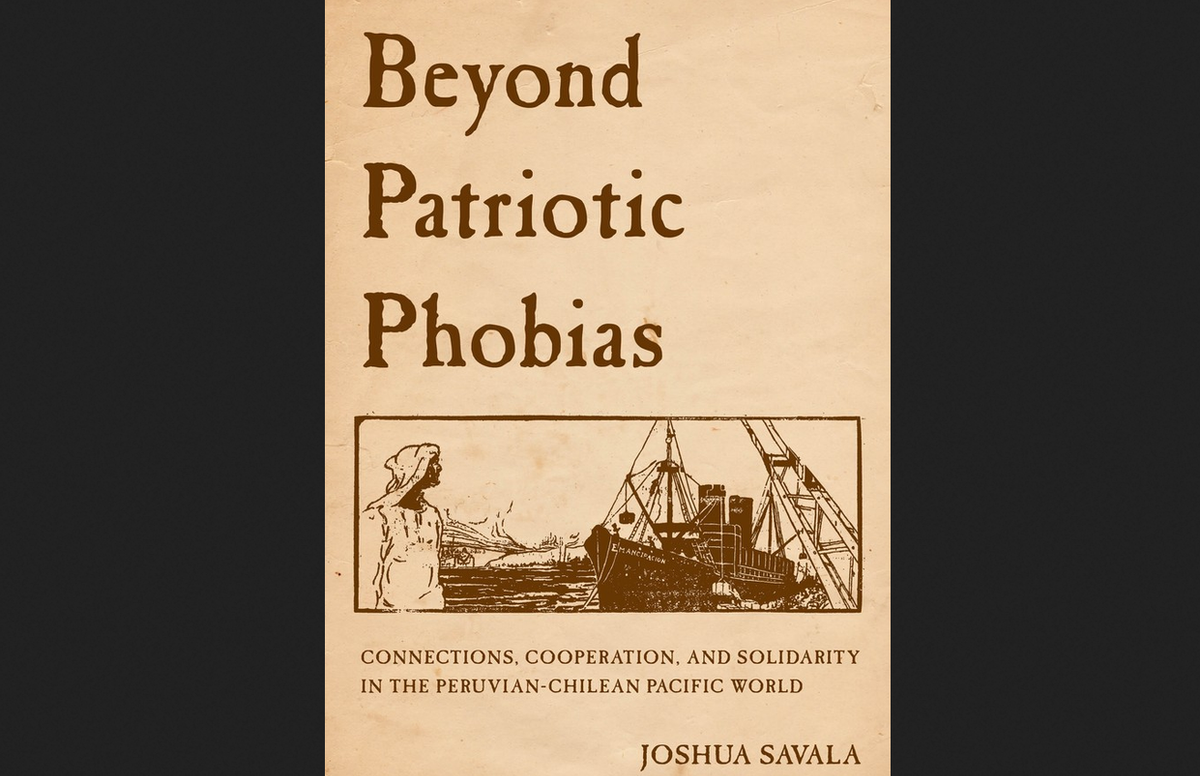
An excerpt from a UC Press blog pseudo-promotional overview by Savala about his text Beyond Patriotic Phobias: Connections, Cooperation, and Solidarity in the Peruvian-Chilean Pacific World (University of California Press, 2022).
And an excerpt from an interview with Savala regarding his article "Ports of Transnational Labor Organizing: Anarchism along the Peruvian-Chilean Littoral, 1916-1928," Hispanic American Historical Review, vol. 99, no. 3 (2019), pages 501-531. DOI: doi.org/10.1215/00182168-7573529
--
Excerpt 1:
What was much more interesting to me than the well-documented and discussed nationalism that developed (in part) out of the war [between Chile and Peru, 1879-1883] was the possibility of people who either did not care about such things or who actively organized against the nationalism of the era. […] And […] [revolutions] remained real options for many port and maritime workers across the first decades of the twentieth century. […] In the larger manuscript, I expand on the place of maritime and port workers, looking more closely at their laboring conditions, their lives, and the politics of masculinity and sexuality at sea and at port. Another chapter examines medical cooperation during the cholera outbreak of 1886-88 in Chile. And the last chapter centers the police and their efforts to put new criminological methods into practice at home and transnationally. The broader project, then, sticks to this idea of transnational solidarity […]. I wanted to avoid the diffusionist narrative, whether that be from a European center or from central Chile. […] When we are researching and writing about [labor] […], clearly many […] sought to organize transnationally, to reach past state borders and […] do away with borders. […] But they were also intensely concerned with national politics and labor laws. […] This is why […] I try to push a dual transnational and comparative approach, to combine scales of analysis. […] One of the other challenges to transnational history is simply the vast literatures one must read. Studying one place is hard enough […]. The reward of such a venture, though, is pulling together debates and strands of the literature […]. The Latin American Pacific has been largely overlooked. But thankfully in the past decade or so, we are beginning to see a number of new works that speak to the role of the Pacific. This shift in geography and analytical perspective, I would say, comes in large part from the transnational perspective–a perspective that influenced the building of the Atlantic world paradigm as well.
Words of Joshua Savala. As quoted in the transcript of an interview conducted/posted by Sean Mannion. ‘Interview with Joshua Savala, author of “Ports of Transnational Labor Organizing: Anarchism along the Peruvian-Chilean Littoral, 1916-1928.”‘ HAHR Online (by Hispanic American Historical Review). 13 November 2019. [Emphasis mine.]
--
Excerpt 2:
People in both countries occasionally made jokes about the other […]. But […] there was something beyond the one liners. […] [T]he War of the Pacific (1879-1883) acted as the structuring event in the modern history of both countries, with conflict at the center. While certainly a reality, conflict […] could not be the only way of telling this history, could it? […] Labor and working-class history is at the core […]. Maritime and port workers […] lived and labored in a cosmopolitan Pacific world. Some did see and even engage in nationalist discourses. But many also had no interest in the nationalism of the day, and some analyzed it as just one more strategy by the state to divide the working class […]. Addressing fellow Chilean workers in November 1924, one […] wrote that it was time to show their Peruvian comrades that “patriotic phobias have not contaminated us.” This was the politics that animated radical workers along the coasts of Peru and Chile to organize around both local and transnational issues. Of course, maritime and port workers were not the only ones engaged in this type of thinking and acting. As I read reports from port cities, I started to read more and more about cholera in the 1880s. I followed letters from different institutions within Chile and Peru and medical journals and finally came across the case of Dr. David Matto. Born in Cusco, Matto would be sent to Chile to investigate the spread of cholera. His published letters back to Peru revealed some of the intricacies of the Chilean state’s response to the epidemic, useful information for thinking about the history of medicine […]. In addition, I also take time to think through laboring in the Pacific, constructions of masculinity and sexuality, and the history of policing. These are all parts of the equation required for understanding the transnational and oceanic history of Peru and Chile.
Text above by Joshua Savala. “A look inside Beyond Patriotic Phobias.” UC Press Blog. 23 May 2023. [Emphasis mine.]