Some resources to learn about Canadian corporations' push for metals mining (and Indigenous defiance) in the Boundary Waters
(Originally posted elsewhere on 25 June 2020.)
Amidst pandemic/quarantine closures, intensified Canadian pushes for construction of Keystone XL in Lakota territory of the Northern Plains, and similarly intense Canadian state (especially Albertan) advocacy for expanding the pipeline corridors traversing Sault Ste. Marie and the lower peninsula of Michigan, we also have this push to ramp-up mining itself at the Boundary Waters.
Specifically: metals mining.
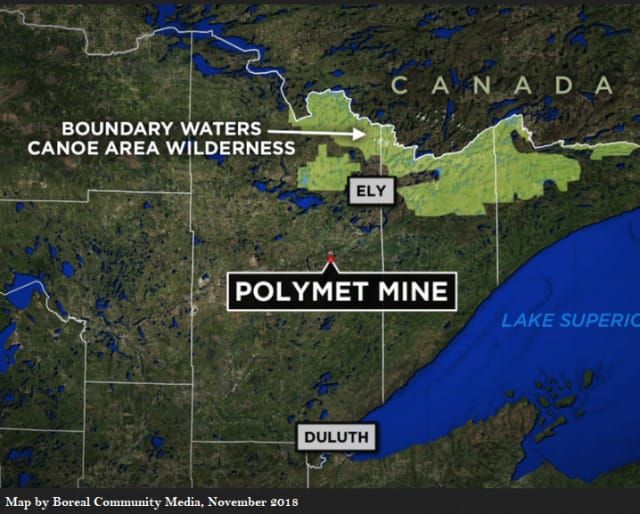
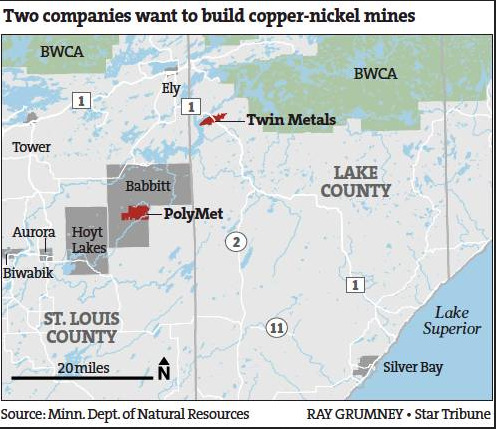
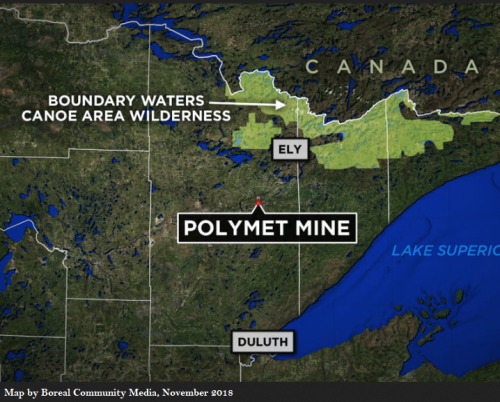
In June 2020, the Canadian mining company PolyMet very close to opening Minnesota’s first open-pit copper-nickel mine next to Boundary Waters, as Minnesota’s Supreme Court prepares to hear one of the final cases involving the company’s environmental permits. The $1-billion mine is expected to threaten Iron Ranges, Boundary Waters, Lake Superior, and 1854 Treaty Native territory; and would have a lifespan of merely 20 years.
Some resources:
For a good summary: Lorraine Boissoneault. “Conflicted Over Copper: PolyMet copper-nickel mine has been trapped in litigation.” Great Lakes Now. 12 June 2020. Excerpts are included below. Quick excerpt: “In 2011, the Bois Forte Band of Chippewa provided PolyMet with a review of the cultural and traditional religious significance of areas within the NorthMet project area. One of the authors summarized Band members’ unease over the mine, writing, ‘The area still supports cranberries, blueberries and trees with barks that was (and still is) used for illness. In addition, the pristine waters, fish, and natural habitat for fur bearing animals and birds will be affected by the mine. Our thoughts are on the generations to come and the generation that is here now.’”
For a shorter overview: Jennifer Bjorhus. “What you need to know about Minensota’s PolyMey and Twin Metals mine projects.” Minneapolis Star-Tribune. 23 October 2019. A bit outdated, since a lot of permitting/regulation has changed since the pandemic and since US presidential administration rules changes in April 2020.
“The [Minnesota] Court of Appeals ruled that the MPCA, which granted the air permit in 2018, should have looked harder at whether PolyMet plans to expand the mine well beyond the limits imposed by the permit.PolyMet’s Canadian securities filings indicate it may be planning a mine nearly four times larger than the operation covered by the air permit, which limits the mine to producing 32,000 tons of ore per day, the court noted.PolyMet, formally based in Toronto but run from St. Paul, is majority-owned by global mining giant Glencore.” [Source: Mike Hughlett. “Minnesota Supreme Court to review second Polymet permit ruling.” Minneapolis Star-Tribune. 7 June 2020.]
“Minnesota's non-ferrous mining rules have only been used to approve one project: the PolyMet copper-nickel mine, which sits outside the Rainy River Watershed and in the St. Louis River Watershed that flows into Lake Superior. PolyMet is not up and running as it faces numerous legal challenges to its permits, and Landwehr noted the state rules have never overseen an operational copper-nickel mine.” [Source: Jimmy Lovrien. “New lawsuit targets Minnesota’s copper-nickel mining rules.” Duluth News Tribune. 24 June 2020.]
A report on the nearly-complete permitting and Supreme Court case: Jerry Burnes. “PolyMet air permits join others at Minnesota Supreme Court.” Mesabi Daily News. 23 June 2020.
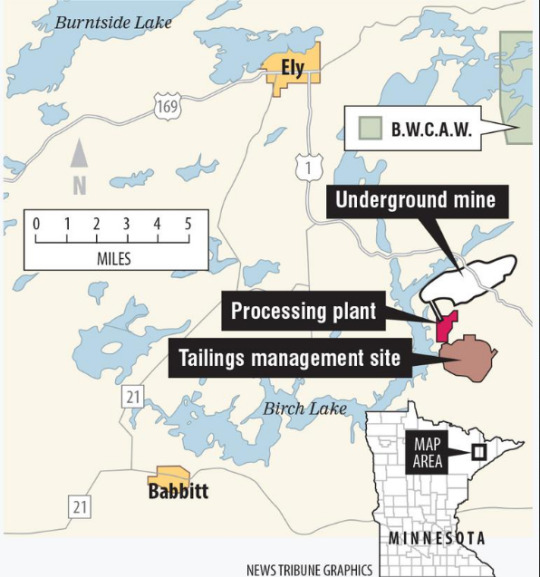
And from June 2020, a summary of PolyMet's mine and local Native objectives:
“Who’s going to be there to tend PolyMet’s grave?” Klemz [Minnesota Center for Environmental Advocacy engagement director] said. The Department of Natural Resources estimated that restoring the mine area wouldn’t be completed until 2072, but another estimate showed water treatment could be necessary for up to 500 years at the plant site. [...] In 2011, the Bois Forte Band of Chippewa provided PolyMet with a review of the cultural and traditional religious significance of areas within the NorthMet project area. One of the authors summarized Band members’ unease over the mine, writing, “The area still supports cranberries, blueberries and trees with barks that was (and still is) used for illness. In addition, the pristine waters, fish, and natural habitat for fur bearing animals and birds will be affected by the mine. Our thoughts are on the generations to come and the generation that is here now.” In September 2013, the Tribal Cooperating Agencies submitted their own cumulative effects analysis, pointing out their many concerns over the proposed mine. “The Fond du Lac, Bois Forte, and Grand Portage Bands, as well as the 1854 Treaty Authority (1854) and the Great Lakes Indian Fish and Wildlife Commission (GLIFWC), have consistently advocated for a more robust, comprehensive CEA for the PolyMet NorthMet project and other mining projects,” the groups wrote. “We have observed that current, historic, and ‘reasonably foreseeable’ mining activities have profoundly and, in many cases permanently, degraded vast areas of forests, wetlands, air and water resources, wildlife habitat, cultural sites [...].
Text above by: Lorraine Boissoneault, “Conflicted Over Copper: PolyMet copper-nickel mine has been trapped in litigation,” Great Lakes Now, 12 June 2020.