The return of uranium mining (2020) in the US, Canada, Australia, and Navajo Country: A news-roundup of the 'skyrocketing' investment (and Indigenous criticism)

(Originally posted elsewhere on 15 July 2020.)
US federal government makes big investments in uranium. US Department of Energy plans major revival or uranium mining. “Stock prices skyrocket” during pandemic and uranium becomes “world’s best-performing major commodity”. Canadian mining companies gear-up for uranium extraction. Australia anticipates possible lifting of uranium mining bans in NSW and Queensland. Native communities (including Lakota, Ute, Navajo) contend with planned uranium mines and radioactive waste shipments.
--
5 March 2020: New South Wales considers revival of uranium.

Excerpt: NSW support of uranium mining strengthens […]. The New South Wales Government has been encouraged to support the repeal of the Uranium Mining and Nuclear Facilities Act to help lift Australia’s uranium mining ban. The New South Wales Legislative Council’s report into the Uranium Mining and Nuclear Facilities (Prohibitions) Repeal Bill 2019 highlights that the ban is impeding the state’s understanding of this resource. […] Australia has the world’s largest uranium deposits […]. If the draft legislation is enacted, it would become legal to mine for uranium in New South Wales for the first time since 1987. [Source: Tara Ham!d. Australian Mining. 5 March 2020. Emphasis mine.]
--
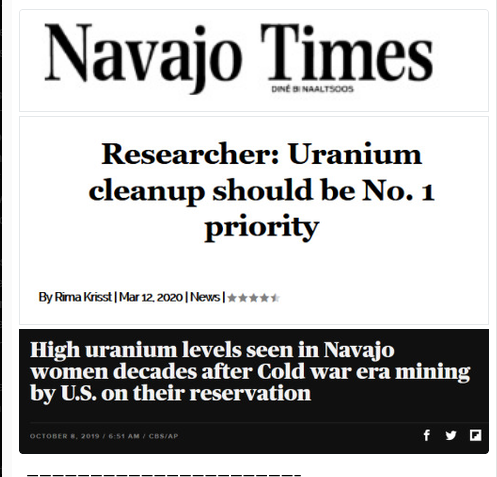
12 March 2020: Navajo country still contending with uranium poisoning.
--
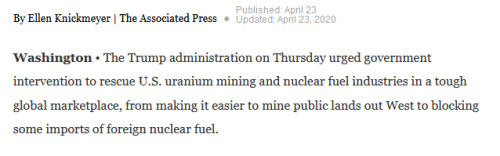
23 April 2020: US president’s office adds $150 million to 2021 budget to purchase uranium from US mines; office releases report, year-long study, recommending total revival of uranium industry.
--
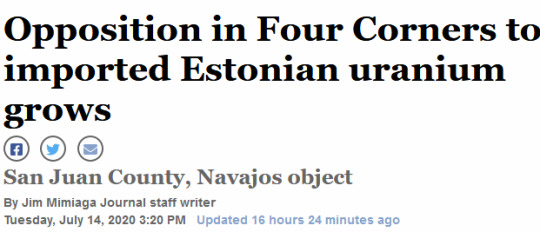
25 April 2020: White Mesa uranium mill anticipates increased radioactive waste shipments as Ute Mountain people resist the plan.
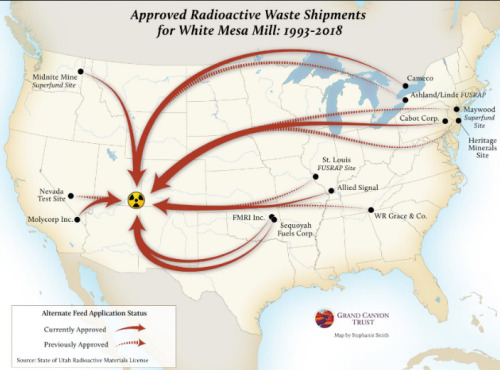
Excerpt: ‘A long-anticipated Trump administration report aimed to “revive and strengthen the uranium mining industry” was released Thursday [23 April 2020], and if its recommendations are implemented, it could provide direct government support for uranium production in San Juan County where the country’s last conventional uranium mill and several idled mines are located. Uranium companies applauded the plan within hours of its release while numerous conservation groups and Native American tribal leaders announced opposition. […] Residents of the Ute Mountain Ute community of White Mesa, which is located several miles south of Energy Fuels’ White Mesa Mill, have long worried that groundwater contamination around the mill site could worsen and eventually reach its drinking water aquifer. The Ute Mountain Ute Environmental Programs Department sent a letter to the Utah Department of Environmental Quality in January pointing to “overwhelming data showing significant trends of increasing groundwater contaminants and acidification” below the mill site […].’ [Source: Zak Podmore.“ Trump administration plan could revive the uranium industry in Utah, raising concerns from conservationists.” The Salt Lake Tribune. 25 April 2020. Emphasis mine.]
--
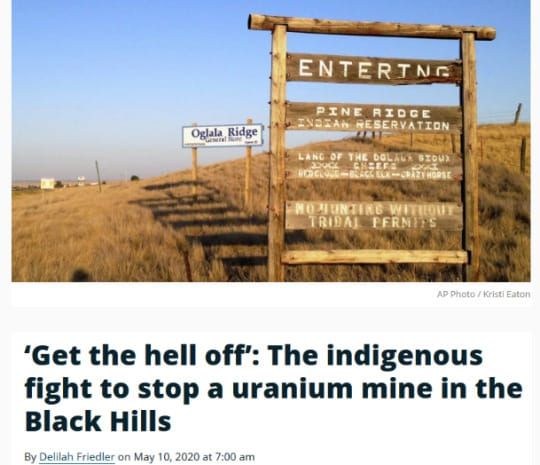
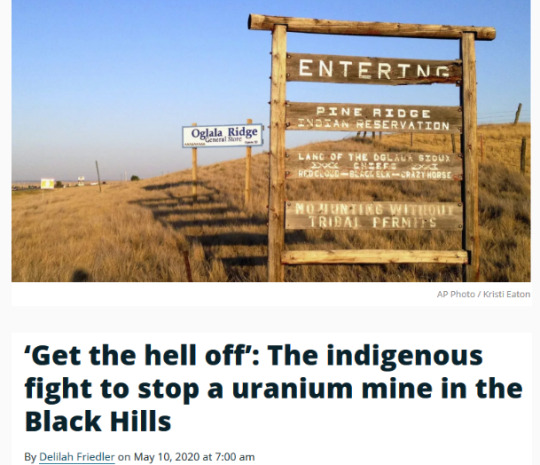
10 May 2020: Lakota resistance against uranium mining in the Black Hills; Canadian mining company wants to open major uranium mine in the region.
--
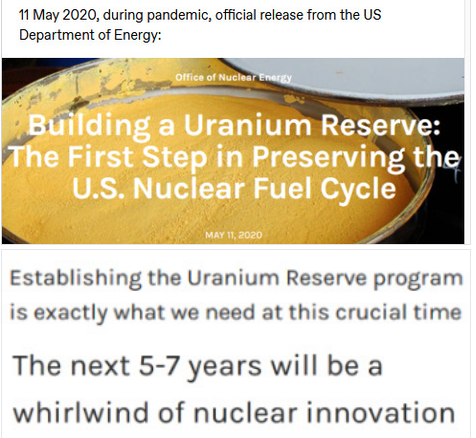
11 May 2020, one day later: US Department of Energy announces Uranium Reserve program, full revival of uranium industry.
--
22 May 2020: Native communities of Ute Mountain must contend with increased shipment of radioactive waste to White Mesa.
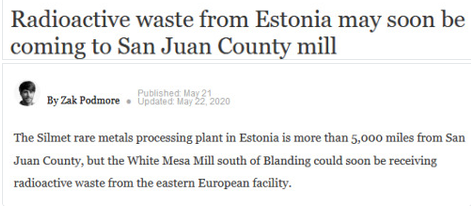
Excerpt: “The facility has gone from being the North American continent’s dry, low-level radioactive waste disposal facility of choice … to now being the world’s radioactive waste dump,” said Scott Clow, the environmental programs director for the Ute Mountain Ute Tribe, which has land three miles south of the mill. “That is something the tribe opposes,” he added. “The tribe does not want these materials to continue to be delivered to their neighborhood, their traditional lands, and stored there forever.” In January, the tribe sent a letter to the state pointing to “overwhelming data showing significant trends of increasing groundwater contaminants and acidification” below the mill site and requesting the state conduct a thorough investigation into the root causes of the contamination, which include “rare toxic metals” such as beryllium, cadmium, nickel and thallium. [Source: Podmore, Salt Lake Tribune 22 May 2020.]
--
3 July 2020: North Queensland authorities want to lift ban, revive uranium mining in rural, Aboriginal-administered regions.
Excerpt: “North Queensland First leader and Whitsunday MP Jason Costigan wants Queensland to lift the ban on uranium mining. Speaking in Townsville alongside his new NQF candidate Clynton Hawks Mr Costigan said the Palaszczuk government needed to resume mining to revive the fortunes of regional north Queensland. […] “After inspecting what’s left at Mary Kathleen last year, I came to the conclusion we should go back to the future and mine uranium in Queensland again exporting it to the world, creating jobs and economic development,” Mr Costigan said. Uranium mining is legal in South Australia and NT but was banned in Queensland in 1989 by the Labor government, then repealed by the LNP Newman government in 2012, and then banned again in 2015 by the Palaszczuk government. [Source: Derek Barry. “Jason Costigan wants Queensland to export uranium again.” The Canberra Times. 3 July 2020.]
--
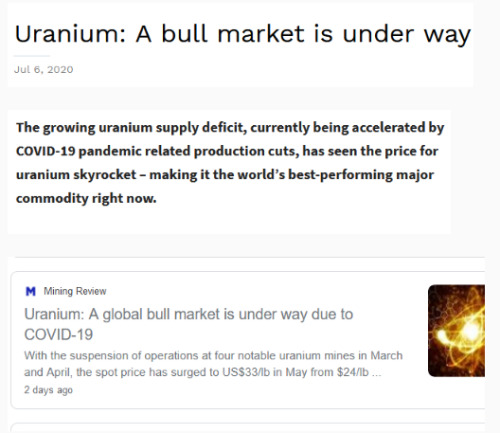
6 July 2020: Uranium value “skyrockets” thanks to pandemic and US government support; uranium becomes “world’s best-performing major commodity."
--
14 July 2020: