Unruly shoreline ecologies, racialized imaginaries of "pestilent" swamps, and the (un)making of imperial borders in Bengal, Aotearoa, and Brazil

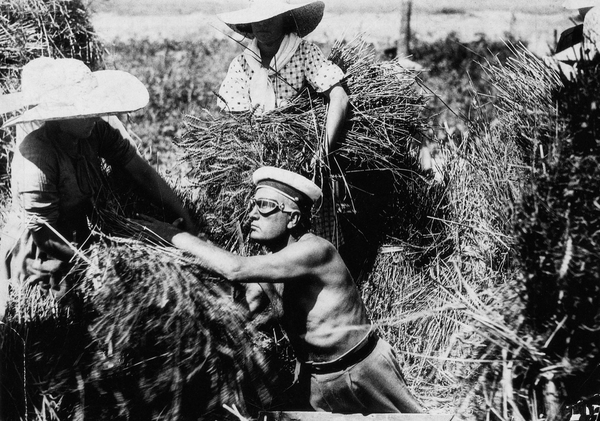
In December 1928, Benito Mussolini broke ground—quite literally—on a massive development project targeting the “death inducing swamps” of the Pontine Marshes, the substantial wetland region on Rome’s southern edges, which were to be remade into “New Town” settlements whose residents would model ideal standards of productivity. Having coined the term fascist a decade earlier, the Italian prime minister now sought to enforce order amidst the “unhealthy” swamps while cleansing other urban areas of perceived idleness through a process described as sventramento (disembowelment); wetlands would be materially drained of water, while cities would be immaterially drained of idleness. This ominous medical language of bodily mutilation, used in the context of remaking landscapes, is rehearsed elsewhere on the globe at that same time; scholar Archie Davis examines how, in the 1930s, administrators in Brazil conducted a “crusade” against settlements in Bahia’s mangrove swamps, environments described as “enemies of life” which “mutilate human energy” and “annul” work ethic, as the wetlands would be purged in a process called aterramento (making of land).
Wetlands, in their disembowelment, were ascribed qualities of the human body. Wetlands also, through their association with corrupting influence, were ascribed qualities of human (im)morality.
This almost-magical transmutation process—the making of land physically (via flood-control infrastructure) and ontologically (via rhetoric and property laws) to bring both material and moral order to wetlands—has a long history. By tracing the endurance of medicalizing and racializing rhetoric of contamination and border permeability in wetland-drainage discourses, from the nineteenth-century British corralling of Bengal’s estuaries and the draining of Aotearoa’s “nuisance swamps” to Brazilian projects of the 1930s, we might find that wetlands of the imperial frontier have been framed as disordering agents in opposition to a “healthy” modernity. By following the rhetorical glorification of borders and the recurring villainization of wetlands, we might also be able to perceive a counter-response in the defiant voice of plants, insects, and the broader ecologies which they sustain.
In marshes, deltas, mangrove forests, and other fluid ecologies, there may not be such a clear distinction between “land” and “water.” Shorelines might change every year, every month, or even every day depending on floods, tides, and seasons. A shoreline, then, is not necessarily a boundary between land and water, but is instead a zone of transition, interface, and exchange. If an interested party—a nation, an empire—hopes to administer such a place for “productivity,” there are (at least) two challenges. One is physical, as wetlands are fixed with levees, dams, or other material infrastructures. But another challenge is imaginative, since wetlands are like a provocation, whose fluctuating shorelines undermine the empire’s claims that borders are definitive.
Approaches
Why listen for the voice of these ecologies? In historian Rohan Deb Roy’s scholarship on “nonhuman empires” and Jonathan Saha’s examinations of “interspecies empire,” the maintenance of state power is inseparable from the forced conscription of other-than-human entities. Beyond the appropriation of plants and animals as physical commodities to be circulated in global markets, this multispecies entanglement might also involve the harnessing of the visual, literary, and rhetorical representation of plants and animals. Roy affirms that “insects have served as enduring political and social metaphors […] often connected to practices of dehumanization and zoomorphism,” as “insects were invoked as symbols to characterize colonized landscapes, peoples, and cultures”; describing British rule in South Asia, Roy finds that “imperial discourse constructed India as a land of white ants [termites]” and “held India and its inhabitants responsible” in ways which “reinforced the civilizing rhetoric of imperial ideologues” with appeals to “Malthusian anxieties” and “Orientalist descriptions.
The permeability of national borders and the rhetorical of conflation other-than-human pestilence with “foreign” immigration specifically is elaborated upon by scholar Banu Subramaniam; in the volume Rethinking Invasion Ecologies from the Environmental Humanities (edited by Jodi Frawley and Iain McCalman, 2014); and in a notable special issue of Social Research (The Invasive Other, edited by Ann Laura Stoler, 2017). Historian Jeannie Shinozuka examines how turn-of-the-century US media raised alarm about insect “pests” from East Asia which were perceived as a threat to the crops of California’s agricultural industry, hinting at US anxieties of “alien” immigrants arriving from East Asia at that same time. The monoculture crop—perhaps a stand-in for the nation—was seemingly under threat from unruly entities both human and other-than-human. This language of contamination from beyond the border, implicating both health and race, suggests that the maligning of environments is linked with the maligning of peoples. Sharae Deckard and Kerstin Oloff suggest that the threatening image of sargassum and other “weeds” in English-language weird horror literature from 1900 to 1930 might reflect—among metropolitan writers and audiences—anxieties about the transgression of borders at the imperial periphery in a time of increased global migration and US imperial aspirations.
Vast monocultures of sugarcane, cotton, and coffee made world(s)-altering impacts on both European treasuries and tropical landscapes. As scholar Britt Rusert finds, early Caribbean plantations were laboratories of empire, spaces of containment where “the permeability of plantation borders” was policed against the intrusion of “fugitive” influence from surrounding environments; within these confines, where principles of the Scottish Enlightenment and ascendant European scientific frameworks were practiced, not only could profitable plant cultivars be literally experimented upon, but models of labor coercion and racial hierarchies could also be experimented with and managed for productivity. This speaks to the utility of border-making, techno-managerial sciences, and rhetorical invocation of fugitivity and invasion which are also deployed in discourses of wetlands drainage and land improvement.
Yet wetlands speak to livable possibilities and alternative imaginaries beyond the heavily-policed borders of the plantation.
Section 1: Vexing mangroves and British engineering of borders among Bengal’s fluid ecologies
The circuit of global exchange operated by the early nineteenth-century British empire, rich from Jamaican sugarcane and soon to consolidate an Assamese tea industry, demonstrates the utility of tropical plantations to the maintenance of power. Also at play was an epistemological embrace of “land improvement,” an influential concept in European practice into the twentieth century; this approach sought to maximize productivity, often in service of farms and pasture. The property boundary demarcated these “improved” pastoral spaces.
The shoreline—where land and water are in a kind of dance, receding and expanding with tides and floods—can be awfully hard to administer for extraction. Scholars Natasha Ginwala and Vivian Ziherl describe how the Sundarbans, the “largest mangrove forest in the world” and covering about 10,000 square kilometers (including much of Bengal), presented “legal vexations” for British administrators since “such amphibious and obtuse terrain” where “the coastline becomes indiscernible as a single entity” becomes a challenge in land-rights cases “wherein border-making becomes the necessity of tenure”; in their words, among the mangroves, “we are met with the trembling instability of borders.”[1]
How did early East India Company administrators account for the obstacle posed by these shorelines? Kuntala Lahiri-Dutt summarizes how “[s]uch a separation of land and water was made possible” through the pivotally significant Bengal Alluvion and Diluvion Act (BADA) of 1825, “aimed at reducing the complexities of revenue collection due to erratically shifting lands” by establishing “a set of rules to guide the courts to determine claims of land ‘gained by alluvion’” through which “Bengal’s essential character as a fluid landscape was changed”; BADA allowed British power-consolidation since newly-exposed land “accretions in navigable rivers would be the property of the state.”
This was not only a physical process, but also a matter of imaginative control. Historian Debjani Bhattacharyya describes “the legal processes through which the mobility of the landscape was accommodated into the architecture of ownership” in Bengal, such that the “drying [of] a tidal landscape was as much an infrastructural project as it was an ontological endeavor”; British administrators sought to fix these shorelines with “the materiality of the paper.”
Inducting unruly ecologies into modernity, the colonial pen and paper, like sorcery, conjured land into being.
Section 2: British health and the re-ordering of Aotearoa’s “nuisance swamps”
Wetlands do not only destabilize borders, but also human well-being—at least in some imaginaries.
Mangroves weren’t alone in their vexing defiance. Conifer trees of Aotearoa’s North Island, living near some of the most southerly-ranging mangroves on the planet, also frustrated British administrators. Scholar Anna Boswell has elaborated on this colonial re-ordering of Aotearoa, where “hard distinctions between land and water” were central to “investment in firm, dry ground whose calculable value resides in its farmability, settleability, and saleability” enacted through wetlands modification “which privileges the linear geometry” of “agronomic” landscapes; as in the administration of Bengal, colonial border-makers in Aotearoa also sought to reject “murky, mucky, chaotic and disorderly” lifeways “founded on fluidity and in-between-ness.”
Describing the inception of the Napier Swamp Nuisance Act of 1875, passed at a time when “politicians suggested … [that Aotearoa] be decontaminated through strategic interventions to remove and remake wetlands” in the “great swamp region of Waikato,” scholars Meg Parsons and Karen Fisher found that perceptions of the “horrible depths of [the] black stinking bog” were entangled with concepts of health.[5] Referring to how the “damp vapour arising” from wetlands was perceived as “highly prejudicial to residents’ health,” particularly in the context of Victorian-era discourses of class distinction and cleanliness, Parsons and Fisher propose that these imaginaries perpetuated the claim that persistent illness and poverty among Maori communities was simply a natural result of the environmental context; “[s]uch ideas, which fused medical and socio-economic theories, justified indigenous dispossession and drainage works” alike.
Aotearoa was thus remade. Historians Tom Brooking and Eric Pawson describe how native plants, “be they of grassland, forest or wetland, were being replaced with what were usually termed […] ‘English grasses’” to accommodate sheep pasture; they point to case of the Banks Peninsula between 1860 and 1890, when the “peninsula’s trees” were “fired, and seed of ‘English grasses’ broadcast in the embers,” a new version of Britain recreated in the Antipodes.
In Aotearoa, we see the spectre of the pest manifest with clarity as a threat entangled with the unproductive reputation of wetlands. As settler author Charles Flinders Hursthouse wrote in 1857: “Damp and dripping forests, exhaling pestilent vapours from rank and rotten vegetation, fall before the axe … Fen and march and swamp, the bittern’s dank domain, fertile only in miasma, are drained; and the plough converts them into wholesome plains of fruit, and grain, and grass.” In this colonial imaginary, the process of land improvement is doubly-justified: Pestilence is seemingly defeated by the wholesomeness of productive pastures.
Section 3: Are Recife’s mangroves “enemies of life” or “the soul of a city”?
A few decades after the passage of Aotearoa’s Land Drainage Act of 1893, during the Italian campaign to drain the Pontine Marshes between 1928 and 1942, drainage pumping stations took on the moniker impianti idrovori (akin to something like “water-eating”), a curiously visceral description for such ostensibly modern machines. Federico Caprotti and Maria Kaika, writing about the Italian project and its promotional newsreels (some featuring Mussolini himself, working on-site), draw attention to the campaign’s invocation of theme of work ethic. New Town settlements would host residents relocated from elsewhere; the master-planned architecture and urban design would encourage efficiency.
By that time in the 1930s, as the Dairy Board proudly advertised the transformation of Aotearoa into the “Empire’s dairy farm” and Mussolini was fighting the unruly marshes, the discourses of health, work, nation, and wetland-drainage were also converging in Brazil.
As the Bahian city of Recife became subject to large-scale infrastructure projects, mocambo was cited as a term in nationalist discourses with reference to low-income settlements on the city’s periphery. During the Brazilian presidency of Getulio Vargas and the harsh nationalist rule of the Estado Novo years (1937-1945), Vargas had appointed Agamenon Magalhães as governor of Bahia; Magalhães established Liga Social Contra o Mocambo (Social League Against the Mocambo). The historical legacy of the term mocambo is relevant. Along the coast where Portuguese planters had established their sugarcane monoculture, the state of Bahia had been the site of prominent quilombos, settlements founded by Black slaves who had escaped the planters’ fields; quilombos were enmeshed in networks with mocambos, a term ascribed to similar bush-camps of runaways in the backlands, like a constellation of refuges. The term mocambo came to be associated with the image of swamps.
Archie Davis, invoking this history of quilombos, also contextualizes these campaigns in which “[m]ocambos were characterized as repellent, unhygienic, and dangerous” by reminding us that “[t]hese were the decades of the embranquecimento [whitening] of the Brazilian population through public policies of immigration, miscegenation, and sterilization”; these “attempts to ‘cleanse’ the city functioned through a distinct process” called aterramento (making of land). Davis points to the language of health used by Magalhães in 1939: “The idle life, the life that the income of the mocambos provides … It is a life of stagnant water. … [that] generates in its breast the venom of larvae, which are the enemies of life. Enemies of life, as are the mocambos and the sub-soil of cities, where the polluted waters contaminate pure waters.”
Conclusion: Imaginative power and the wetland’s retort
In Boswell’s descriptions, colonial administrators were “disconcerted by the strangeness” of “impenetrable swamp-forests” and “monstrously peculiar forms” of Aotearoa’s unique ecoregions (including lush temperate rainforest) and endemic creatures (like flightless nocturnal parrots, large carnivorous snails, and the ancient tuatara); thus, the “transformative” process “involves reshaping the threatening, chaotic, destabilizing and alien elements so that the place can be re-born as home: familiar, safe, controlled, and controllable” with “rectangularised” parcels of land. Anxiety about wetland “vapour” in Aotearoa in the 1870s foreshadows the later language decrying threats to health and productivity in Mussolini’s campaign to build hyper-productive New Towns and in Magalhães’s crusade.
From fascist-administered Rome to Estado Novo-administered Recife, the rhetorical emphasis on both work ethic and the purity of the nation maligns wetlands not merely as physical threats but also as imaginative threats. Magalhães made this connection explicit: “The mocambo which repels. The mocambo which is the tomb of a race … a sombre landscape of human misery … which mutilates human energy and annuls work.” Thus, “unhealthy,” “unproductive,” or otherwise resistant ecologies were a potential moral corrupter; wetlands seemed capable of provoking something like a corresponding “degeneracy.”
Wetlands, in other words, do not just confound physical infrastructure, but also destabilize certain authorities’ impressions of modernity. Even among the earlier administrators of the East India Company, what Ginwala and Ziherl called the “vexations” of the mangrove swamps required a kind of imaginative counter-attack, or what Bhattacharyya called an “ontological endeavour.” Bengal’s wetlands were corralled not merely through intervention of material infrastructure like dams and levees, but also required the immaterial imaginative frameworks which devalorized wetlands. Indeed, Brooking and Pawson describe how land improvement in Aotearoa was simultaneously “an ideological, material and technical project” which “constituted a way of looking at the world, of imagining the possibilities.”
Davis’s acknowledgement of the consequences of Recife’s anti-mocambo rhetoric illustrates how more than just physical space is at stake: “Or as 1990s mangue beat [mangrove beat] musicians […] put it, ‘the fastest way also to obstruct and evacuate the soul of a city like Recife is to kill its rivers and fill up its estuaries.’” This is echoed in Bengal. Referring to the deprivation of local peoples’ cultural practices as consequences of drainage, Bhattaccharyya describes her telling of the history of British rule in Bengal as a simultaneous “history of forgetting … and because we forget, it is harder for us to imagine alternatives.”
If colonial projects can harm wetlands both materially and immaterially, then perhaps wetlands can speak back in both arenas, too. By draining wetlands and fixing shorelines, colonial administrators were insisting upon the legitimacy of their property claims while also insisting upon the legitimacy of their epistemologies. But the river, the swamp, and the mangrove say otherwise; they are like living retorts to the claim that borders are permanent.
These nuisance ecologies argue that empire is not inevitable.
(I guess this one’s tentatively getting published in June 2026, so I’ll have to take it down from here.)