When we discuss extinct tigers do we also discuss the origins of modern apples?: An entangled Central Asian environmental history

(Originally published elsewhere on 24 July 2020.)
Riffing on ongoing fixation on Caspian tigers: When I see talk of “apples,” I do not often see mention of “tigers.”
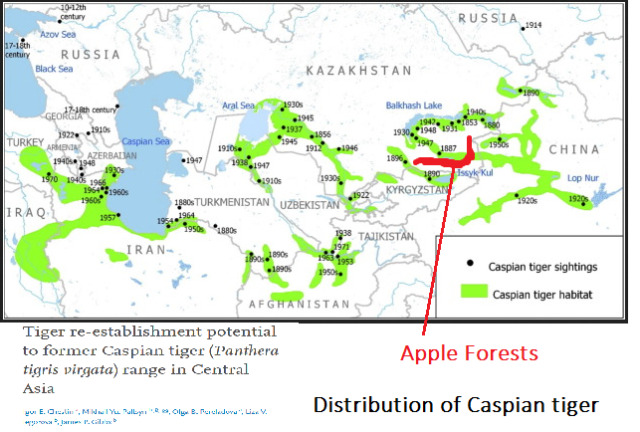
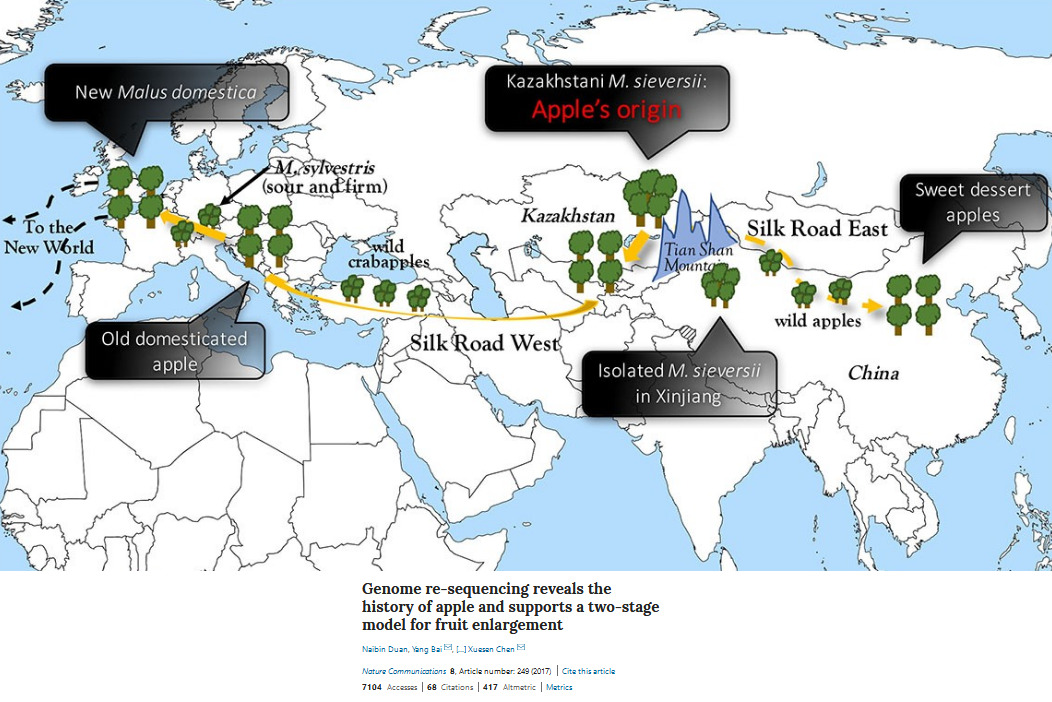
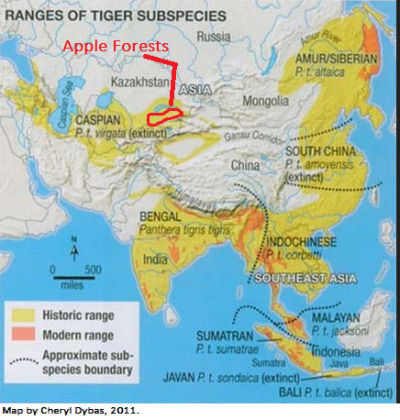
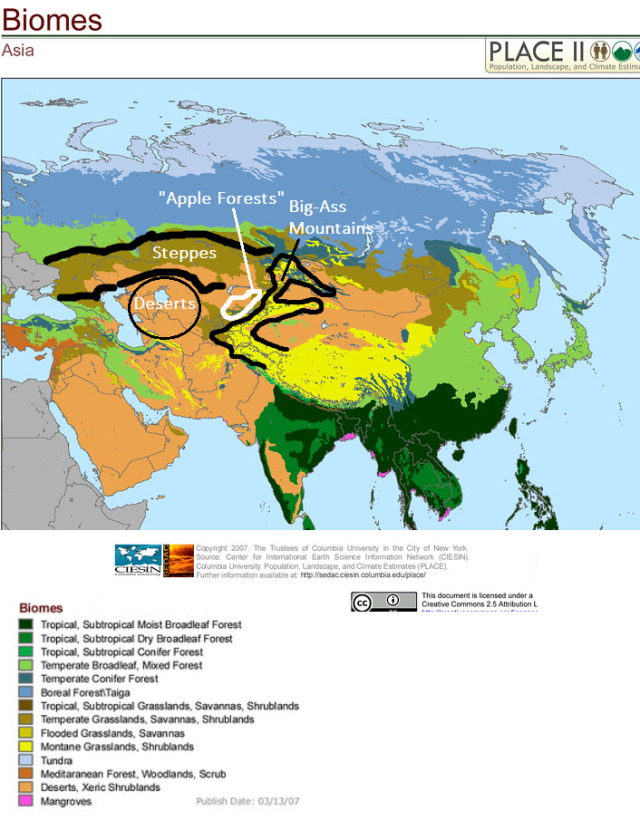
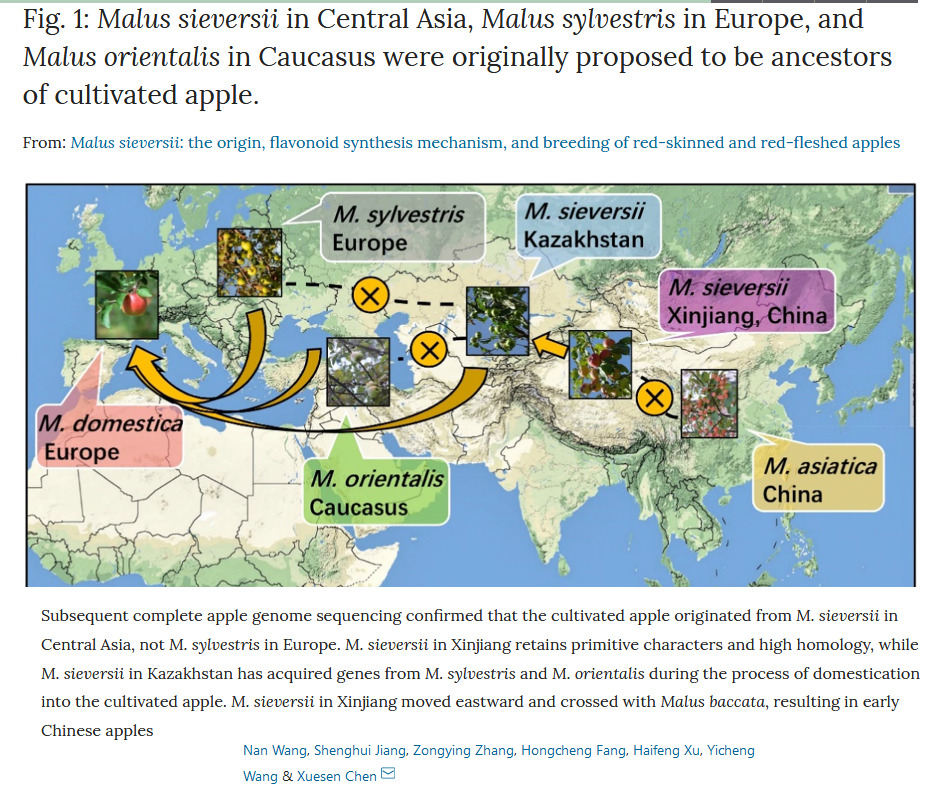
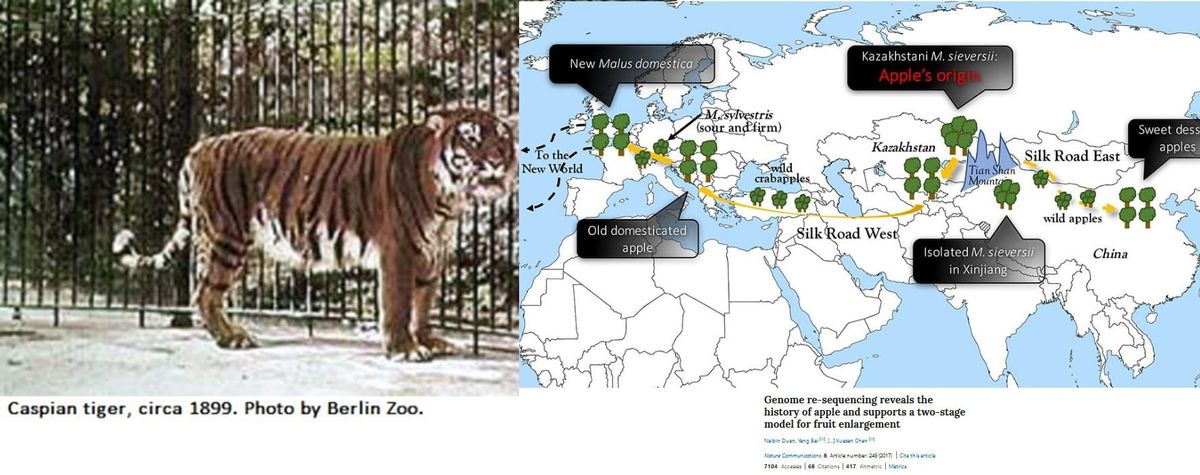
An apparent most-likely origin of the domesticated apple, the “apple forests” of the Tian Shan foothills (where this fruit is joined by wild plum, apricot, hawthorn, and pears) was probably also a stronghold of the now-extinct Caspian tiger (a unique subspecies, Panthera tigris virigata). Central Asia is well known for its vast grassland steppes where horses were domesticated; its multiple extensive arid deserts (the Kyzylkum and Karakum); and its dramatic towering mountains (to the east, the Pamirs and Tian Shan). But there’s a little nook, up against the Tian Shan near Almaty, where a sort of peripheral forest holds many fruit. The largest city in Kazakhstan is Almaty, with about two million people in the urban agglomeration area. The city historically was variously addressed as Almatau (possible approximation: Apple Mountain), Alma-Ata (possible approximation: Father of Apples), and a place “where the apples are” (though there’s disagreement about the etymology either referring to Kazakh-language “apple” or Tukic-language[s] “father.”)
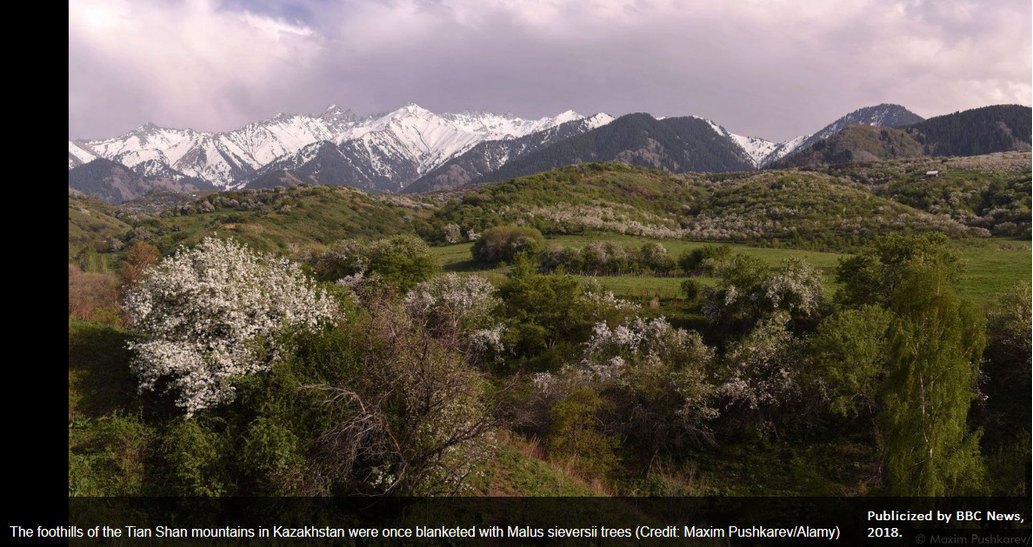
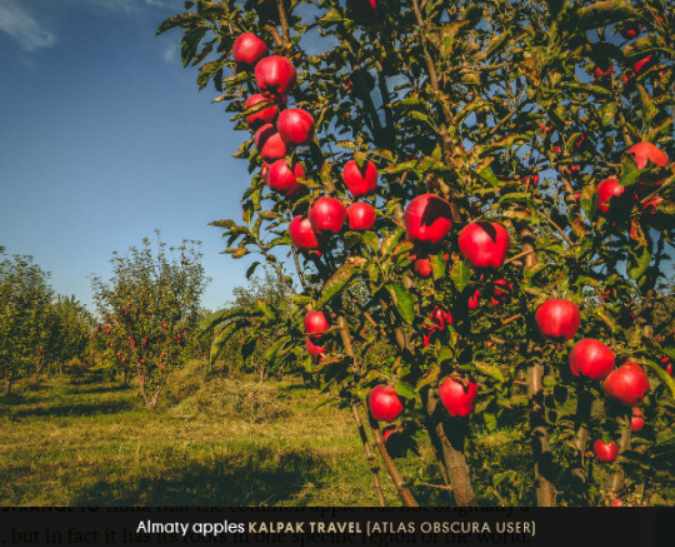
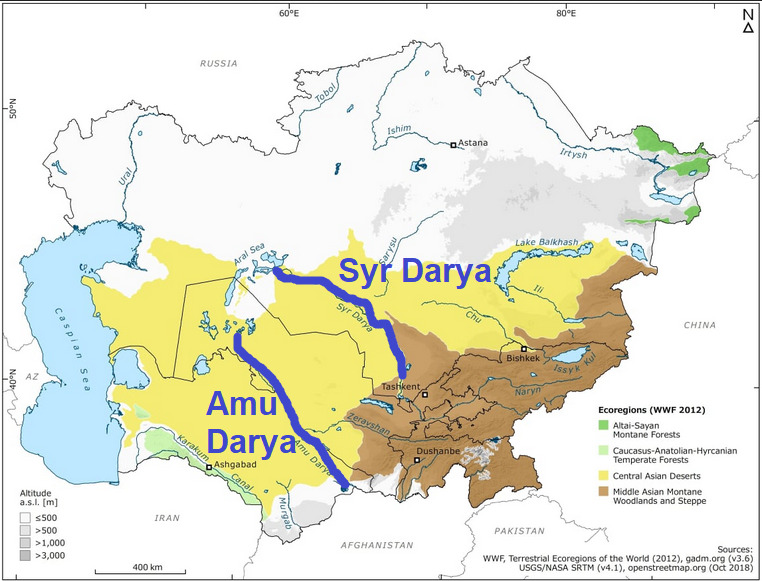
Malus sieversii comes from this region, a wild apple thought to be a likely predecessor of the domesticated apple. Meltwater from snowpack and alpine ice in the Tian Shan region channels into rivers like Amu Darya and Syr Darya, waterways which then flow through the extensive deserts towards the Aral Sea. Along the rivers: history and wonderful artistic traditions of Khwarazm and Bukhara. These riparian corridors of woodland provide a kind of oasis amdist Central Asia’s desert, where the Caspian tiger lived, creating habitat corridors across the desert between the forest of Tien Shan and the forests of the Caucasus and Caspian littoral.
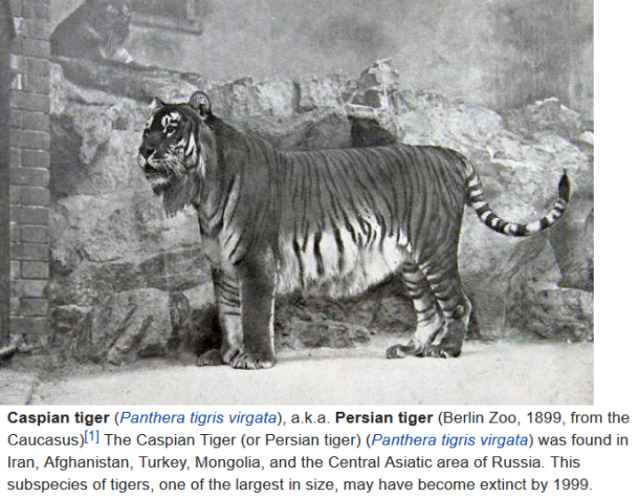
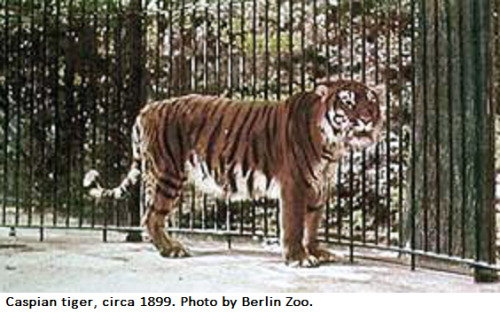
The Caspian tiger was very large and apparently most closely related to the surviving Siberian tiger subspecies. Caspian tigers lived in the Hyrcanian forests along the Caspian Sea’s shore in Persia, and even lived in Anatolia, the Caucasus, and Kurdish regions of Iraq until the mid-20th-century. Put another way: wild tigers near the shores of the Black Sea on the edge of “Europe” only a century ago.