'Why does the European Space Agency launch from South America?': A celebrity sloth, a 'colony of little Crusoes,' and the legacy of French 'torture' at 'Devil's Island'
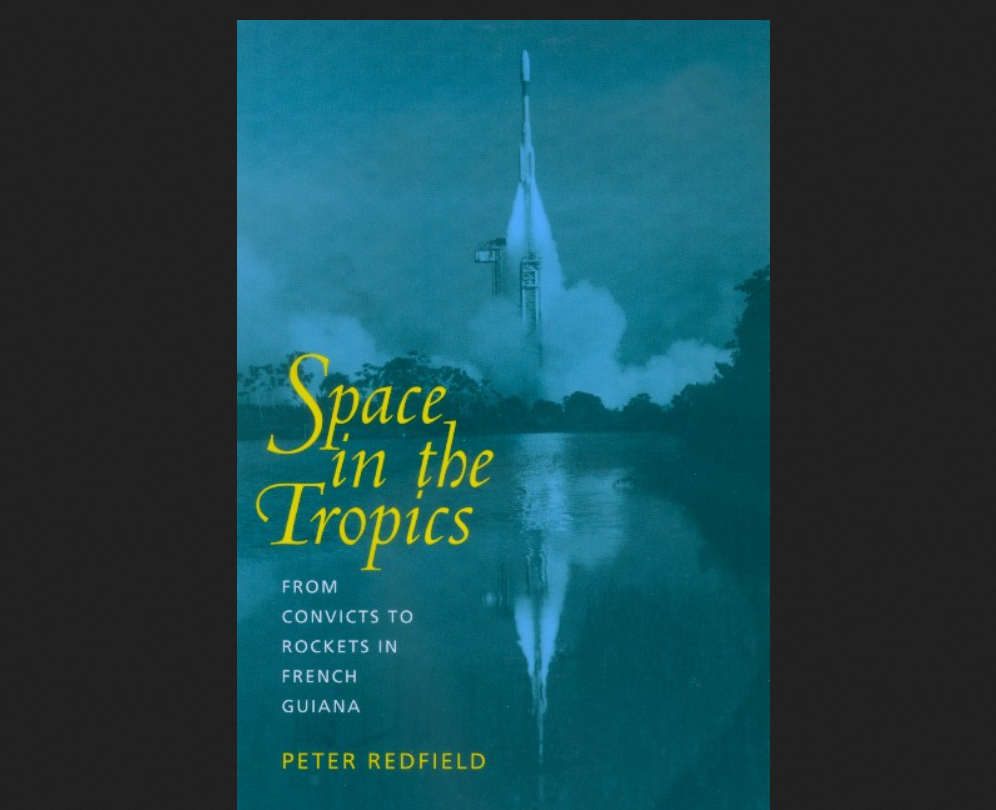
(Originally posted elsewhere on 19 July 2024.)
I was watching discourse on social media. "Why does the European Space Agency launch from French Guiana?" Which compels the question: "What is French about the overseas department?"
Consider this sloth in the news last year (April 2023) during an ESA launch.
Spend all that money to travel to Jupiter's moons ...
All this effort to travel beyond our planet ...
When the wonder, whimsy, and magic was right here, all along:
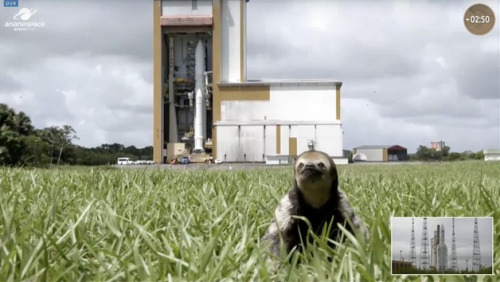
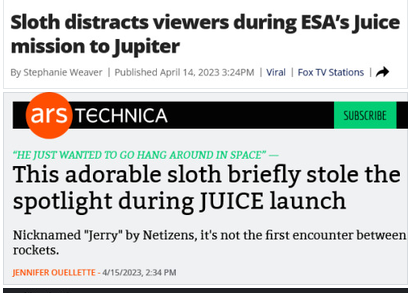
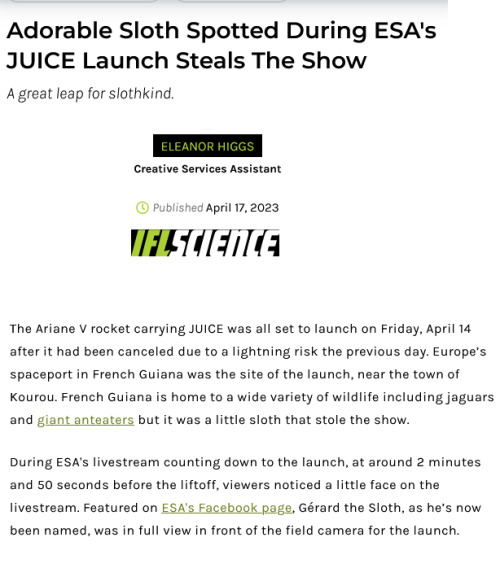
"[A]dorable sloth briefly stole the spotlight during JUICE launch ..."
Jokes aside, Europe got to celebrate again recently (July 2024):
"Europe returns to space with successful rocket launch ... Ariane 6 Soars, Propels Europe Back into Competitive Space Race ..." (July 2024)
Why DOES Europe launch from French Guaiana?
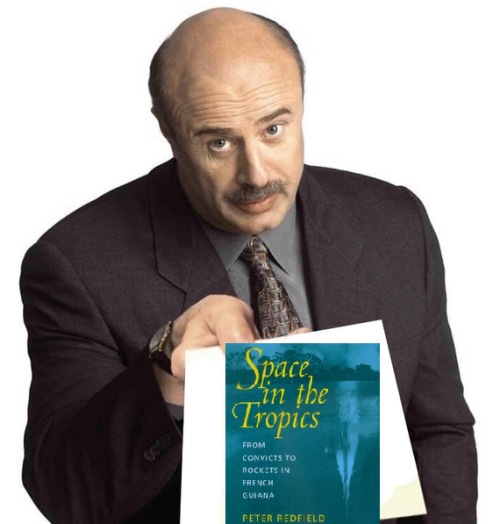
Excerpt:
How is it that a small wedge of the South American continent, long claimed by a major European power and still administered by it, could present a profile of wilderness at the end of the twentieth century? How might this same location on the globe have proved useful for such an unlikely combination of purposes as the resettlement of convicted criminals and the launching of rockets?
French Guiana remains a remarkably insignificant artifact of the political landscape - rarely noticed by most of France [...]. It has also hosted two exceptional experiments of the French state: the historical penal colony known in English as “Devil’s Island,” which operated between 1852 and 1946, and the contemporary space center that launches the European consortium rocket Ariane, responsible for transporting a good half of the commercial satellites orbiting our globe. […] Its base, the Guiana Space Center (CSG), indeed lived up to its slogan, becoming “Europe’s Spaceport,” a center of high technology near the equator. […]
---
[T]he penal colony begins operation in the middle of the nineteenth century, partly as a substitute for a system of plantation slavery. It conceives of French Guiana as open land for agricultural settlement, fertile ground for a tropical - and French - Australia, where the action of moral reform can translate into a scheme of colonization. […] [T]hese early hopes are belied by the high mortality of the convicts […]. Despite periodic calls for reform and increasing international discomfort, the bagne lasts through World War II. It leaves a deep mark on French Guiana, in both symbolic and material terms. As the movement of seventy thousand exiles progresses,the surrounding landscape shifts from a luxuriant field of dreams into a tableau of terror. At the same time, the colony as a whole grows accustomed to the presence of this artificial prison world within it […].
The space center begins operation in the second half of the twentieth century, in the midst of the Space Race and in the aftermath of the Algerian War. It conceives of French Guiana as open land for technical experiments and a gateway into equatorial orbit, an even more tropical - and French - Cape Canaveral. […] [A] regular stream of technicians and engineers arrives to assemble and guide it into space. The initial mandate to provide France with a launch site expands into a focus on commercial satellites, and although local opposition to the project continues, the effects of the enterprise on French Guiana in both symbolic and material terms only deepen. As the Ariane rocket gains importance, the surrounding landscape transforms from an orphan of history into a handmaiden of the future. At the same time, the department grows accustomed to an increased infusion of consumer goods, technical personnel, and […] a new island with an artificial environment and a powerfully altered social profile. [...]
—
Not only do both projects found towns (St. Laurent on the one hand and the new Kourou on the other), but both operate as rival poles of influence and authority relative to the civil administration of French Guiana. Each involves […] its own hierarchies, its own links to bureaucratic networks in Paris, and its own claims to significant national French interests. Each […] exerts considerable influence over the surrounding economy. Most crucially, each controls and orders a separate territory within the larger political entity; each has a spatial presence, a direct impact on the landscape. And tied to this spatial strategy, each comes to serve as a symbolic nexus in collective Metropolitan imagination. […] One employs leftover forces of law and order, whereas the other employs highly trained technical personnel; thus […] both […] have ties to the military […]. The penal colony imports the unwanted of France, whereas the space center imports the selected few. […] And the bagne reflects visions of an ancient underworld, whereas Ariane reflects visions of a new overworld. […]
—
The penal colony takes shape at a crucial moment in European colonial understandings of place and labor. Slavery had just been abolished in the French Empire, and an accompanying understanding of work in terms of race had far from expended its interpretive force. […] If slavery were at an end, then the crucial question facing the colony was that of finding an alternative source of labor. During the period of the early penal colony we see this search for new slaves, not only in French Guiana, but also throughout colonies built on the plantation model. Thousands of Asian Indians and Chinese [workers] found their way to new homes in different corners of the British Empire, serving as contract laborers on plantations. […]
Kourou [the space center] is a neutralized, controlled corner of the tropics, with much of its cultural fabric simply imported. Amid the restricted space of artificially cooled buildings and automobiles, in zones free of carrier mosquitoes and amply supplied with wine and cheese airlifted from France, the distance between Paris and Cayenne shortens; the effects of translation between them grow less clear. If the island mimics the mainland successfully, if Crusoe builds a little England - or France - is his task done? […] To answer this question, let us return to a crucial turning point of Guyane’s history: the aftermath of World War II and the period of formal empire. It was during this era that the natural, political, and moral space of French Guiana was neutralized through a combination of DDT spraying, departmentalization, and the final closing of the penal colony. In 1949, a former teacher […] in Martinique published an overview of the new overseas departments and territories. His description of French Guiana includes a call to arms for its development, a development still conceived in terms of a need for […] agriculture, and industry […]. Gold mines aside, it seems that the method of painstaking labor is the only one really applicable at present. Incontestably, there is magnificent work to accomplish there, such as should tempt young men fond of broad horizons and adventure. The appeal is for an army of Crusoes, advancing ashore to improve their collective island. The questions of race and level of expertise filter through patterns of history and perceived practicality. But the call remains, the call of a wilderness inviting domestication.
—
All text above by: Peter Redfield. Space in the Tropics: From Convicts to Rockets in French Guiana (2000). [Emphasis mine.]